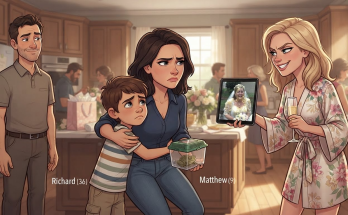
My father’s last words stayed in my head for the rest of the night.
“Maybe seeing two empty chairs will teach you some respect and humility.”
I stood in the kitchen after the call ended, staring at my phone as though it might suddenly ring again and my father might tell me he hadn’t meant it.
That he had been angry.
That he had spoken too quickly.
That of course he would never miss his eldest daughter’s wedding over a vacation.
But the phone remained silent.
Julian stood in the doorway.
He had heard everything.
He didn’t immediately tell me my parents were terrible.
He didn’t tell me to cut them off.
He simply walked toward me, took the phone from my hand, placed it on the counter, and wrapped his arms around me.
For several seconds, neither of us spoke.
Then I whispered, “They’re really going to do it.”
Julian’s hand moved slowly across my back.
“They might.”
“My dad would actually miss my wedding to prove a point.”
Julian pulled back enough to look at me.
“Maya, listen to me.”
I looked up.
“Do not change our wedding because someone is threatening to punish you for having boundaries.”
I swallowed.
“What if they don’t come?”
“Then they don’t come.”
The simplicity of his answer almost broke me.
Because my entire life, nothing involving my family had ever felt that simple.
There was always negotiation.
Always guilt.
Always some invisible scale measuring whether Chloe’s feelings weighed more than mine.
They almost always did.
I sat at the kitchen table.
Julian sat across from me.
“I keep thinking maybe I should move it,” I admitted.
He didn’t look angry.
He just looked sad.
“For them?”
“For peace.”
“That isn’t peace.”
I knew he was right.
Still, decades of conditioning do not disappear because someone points them out.
I had spent thirty-one years learning that being the older daughter meant swallowing disappointment gracefully.
When Chloe turned sixteen, my parents threw her a surprise party at an expensive restaurant.
When I turned sixteen, my birthday dinner was postponed because Chloe had a dance recital.
When I graduated from college, my parents arrived late because Chloe had forgotten the shoes she wanted to wear and Mom drove back home to get them.
At my graduation dinner, Chloe announced she was considering transferring universities.
The rest of the evening became a discussion about her future.
When I got my first major promotion at twenty-eight, Dad congratulated me and then spent fifteen minutes asking whether I could help Chloe find brand partnerships through my company’s marketing department.
Every milestone somehow became a bridge leading back to her.
And every time I complained, I heard the same sentence.
“You’re older, Maya. Be the adult.”
I had confused adulthood with surrender for years.
Julian reached across the table.
“I’m marrying you,” he said. “Not the version of you your family finds easiest to control.”
I stared at him.
That sentence hit harder than anything my father had said.
Three days passed without communication from my parents.
Then my mother texted.
Have you reconsidered?
I stared at the message.
No hello.
No how are you.
Just a question asking whether I had surrendered yet.
I replied:
No. The wedding date remains September 12.
Her response arrived almost immediately.
I hope you understand what you’re doing to this family.
I typed three different replies.
Deleted all of them.
Finally, I wrote:
I’m getting married on the date Julian and I chose more than a year ago. Chloe is welcome to attend if she changes her travel plans. You and Dad are welcome regardless. Nobody is being excluded.
Mom didn’t respond.
Thirty minutes later, Chloe called.
I almost ignored it.
Eventually, I answered.
“What?”
She exhaled dramatically.
“Wow. Okay.”
“What do you want, Chloe?”
“I wanted to talk like adults.”
I almost laughed.
“Then talk.”
She paused.
“Mom says you’re refusing to move the wedding.”
“Yes.”
“You know I already paid for Bali.”
“And I already paid for a wedding.”
“It’s different.”
“How?”
“This trip could actually help my career.”
“And my wedding is my wedding.”
She groaned.
“Maya, you always do this.”
I sat straighter.
“Do what?”
“You act like everything is a competition.”
For a moment, I genuinely couldn’t speak.
Then I said, “You scheduled an optional trip during my wedding week.”
“I didn’t choose the dates.”
“Neither did our venue. Those were the dates available when we booked fourteen months ago.”
“I forgot.”
“That isn’t my responsibility.”
Her voice sharpened.
“You’re seriously going to make Mom and Dad choose?”
“I’m not making anyone choose.”
“Yes, you are.”
“No, Chloe. You booked another event during my wedding and everyone else decided I should move mine. That isn’t me making you choose. That’s all of you asking me to disappear again.”
Silence.
Then she gave a short laugh.
“You’re being dramatic.”
There it was.
Another family favorite.
Dramatic.
Sensitive.
Jealous.
Difficult.
Words used whenever I noticed something everyone preferred I ignore.
I closed my eyes.
“I hope Bali goes well.”
“Maya—”
“I mean it.”
Then I ended the call.
My hands shook afterward.
But beneath the anxiety, something else had started growing.
Relief.
For the first time in my life, I had said no without immediately taking it back.
The following week, my mother called Julian.
I didn’t know until that evening.
He came home carrying groceries and mentioned it casually while putting vegetables into the refrigerator.
“Your mom called me.”
I froze.
“What?”
“This afternoon.”
“Why?”
“She wanted me to convince you to move the wedding.”
I stared at him.
“What did you say?”
Julian closed the refrigerator.
“I told her the date wasn’t changing.”
I waited.
“And?”
“She said marriage requires compromise.”
I actually laughed.
Julian smiled slightly.
“I told her I agreed.”
“What happened then?”
“She said that if I loved you, I wouldn’t let you destroy your relationship with your family over one weekend.”
My smile disappeared.
“What did you say?”
Julian leaned against the counter.
“I told her if your relationship with them could be destroyed because you refused to move your wedding for someone else’s vacation, then I wasn’t sure you were the one destroying it.”
I stared at him for several seconds.
Then I walked over and hugged him.
“You’re going to become their least favorite person.”
“I can live with that.”
Unfortunately, my parents didn’t stop there.
They began calling relatives.
My aunt Denise contacted me first.
She was my mother’s younger sister and one of the few relatives who had always noticed how differently Chloe and I were treated.
“Maya,” she said carefully, “your mother called me.”
“I figured she would.”
“She said you deliberately scheduled your wedding to interfere with Chloe’s career trip.”
I laughed despite myself.
“That’s impressive considering the wedding was booked first.”
“That’s what I thought.”
I explained everything.
When I finished, Denise was quiet.
Then she said, “Your father really said they wouldn’t attend?”
“Yes.”
“Because you won’t move it?”
“Yes.”
Another pause.
“Maya, I’m sorry.”
Those three words nearly made me cry.
Not because they were profound.
Because nobody in my immediate family had said them.
Not once.
As word spread, relatives began contacting me.
Most were supportive.
A few tried to stay neutral.
Two suggested I reconsider for the sake of family harmony.
I politely declined.
Then something unexpected happened.
My grandmother called.
Dad’s mother.
Eleanor Sterling was eighty-three and sharper than anyone gave her credit for.
She lived in Sacramento and had spent most of my childhood quietly watching family arguments from the edge of the room.
Her voice was calm when she called.
“Your father tells me you’re being stubborn.”
I sighed.
“Hi, Grandma.”
“I asked whether you were being stubborn.”
“I’m not moving my wedding.”
“Good.”
I blinked.
“What?”
“You heard me.”
I sat down.
Grandma continued.
“Your father has spent your entire life confusing obedience with respect.”
I said nothing.
“He did it when you were children,” she continued. “Chloe cried louder, so everyone gave her what she wanted. You learned to be quiet, so everyone assumed quiet children don’t need anything.”
My throat tightened.
“Grandma…”
“I should have said something years ago.”
I blinked rapidly.
She continued.
“I’m saying it now.”
For the next twenty minutes, she told me stories I barely remembered.
My tenth birthday, when Dad made me give Chloe one of my gifts because Chloe was upset she didn’t receive anything.
A Christmas when my parents forced me to trade bedrooms with Chloe because she decided she wanted the window facing the backyard.
A high school trip I didn’t attend because the money saved for it was used after Chloe damaged my mother’s car and they didn’t want her to face the consequences.
“You always adjusted,” Grandma said.
“I thought that was what good daughters did.”
“No,” she replied. “That’s what frightened daughters do when love feels conditional.”
I wiped my cheek.
Then Grandma said something I would remember for the rest of my life.
“Your wedding is not a family referendum, Maya. It’s your wedding. I’ll be there.”
“You’re coming?”
“Of course I’m coming.”
“Dad might be angry.”
“I survived raising him. I’m not afraid of him now.”
I laughed through my tears.
For the first time since the argument began, I started looking forward to the wedding again.
The weeks passed.
My parents remained silent.
Chloe began posting about Bali preparations online.
New swimsuits.
Designer luggage.
Resort previews.
Countdown videos.
Three weeks until paradise.
Two weeks until Bali.
Ten days until takeoff.
I muted her account.
Not because I wanted revenge.
Because I wanted peace.
Seven days before the wedding, our venue coordinator called to finalize seating.
“Your parents are still listed in the front row,” she said cautiously.
I stared at the seating chart on my laptop.
Two names.
Patricia Sterling.
Robert Sterling.
For a moment, I considered removing them.
Julian was sitting nearby.
I covered the phone.
“Should I take their chairs out?”
He looked at me.
“What do you want?”
“I don’t know.”
“Then leave them.”
“Why?”
“Because the decision should remain theirs until the last possible moment.”
I thought about that.
Then I told the coordinator to keep the chairs.
Five days before the wedding, my father finally contacted me.
Not by phone.
By email.
The subject line read:
Final Opportunity to Fix This.
My stomach tightened before I even opened it.
The message was long.
Very long.
My father began by saying he was disappointed that things had reached this point.
Then he spent six paragraphs explaining why everything was my fault.
He accused me of intentionally creating conflict with Chloe.
He accused Julian of encouraging me to disrespect the family.
He accused me of caring more about appearances than relationships.
Then came the paragraph that would eventually change everything.
You have always been jealous of the attention Chloe receives, and this wedding has become another opportunity for you to force everyone to center themselves around you. Your mother and I have tolerated your resentment for years because we hoped maturity would eventually resolve it. Apparently, we were mistaken.
I read it twice.
Then three times.
My vision blurred.
There was more.
If you proceed with the wedding on September 12, you should understand that your mother and I will not attend. We will be supporting your sister, who has a genuine professional opportunity that could influence her future. Perhaps when you look at the empty seats reserved for us, you will finally understand that actions have consequences.
Then the final sentence.
Respect is earned through sacrifice, Maya, and you have chosen selfishness.
I didn’t realize Julian had entered the room until he placed his hand on my shoulder.
“What happened?”
I turned the laptop toward him.
He read silently.
His expression changed gradually.
Confusion.
Disbelief.
Then anger.
But he didn’t say anything until he reached the end.
“Did he seriously put that in writing?”
I wiped my face.
“Apparently.”
Julian scrolled back up.
Then he asked, “Can you forward this to me?”
I looked at him.
“Why?”
“I want a copy.”
“What are you going to do?”
“Nothing without your permission.”
I hesitated.
Then forwarded it.
Two days later, something else happened.
Grandma Eleanor called Julian.
I didn’t know about that conversation until much later.
Apparently, my grandmother had received a message from Dad asking relatives to avoid “encouraging Maya’s behavior.”
Grandma did exactly the opposite.
She sent Julian screenshots.
Messages Dad had sent to several family members.
One read:
She needs to learn that family doesn’t reorganize everything around her just because she’s getting married.
Another said:
If people keep indulging her, she’ll never learn humility.
Another:
Missing the ceremony is the only way Patricia and I can make her understand how serious this is.
But the worst one had been sent to Uncle Raymond.
Once the embarrassment passes, she’ll come around. Maya has always been desperate for our approval.
Julian stared at that sentence for a long time.
He later told me that was the moment he decided my father’s words would eventually be answered.
The morning before the wedding, I received one final text from Mom.
We fly out tomorrow morning with Chloe. There is still time to reconsider.
I read it carefully.
Then replied:
I love you. I hope you have a safe trip.
Nothing more.
At 6:45 the following morning, while I was drinking coffee in my hotel room overlooking the vineyards, my phone buzzed.
A photo.
My mother, father, and Chloe smiling inside an airport lounge.
Chloe wore oversized sunglasses.
Dad held a coffee.
Mom stood between them.
Underneath, Chloe had written:
Bali bound!!! Some opportunities only come once!
I stared at the image.
Then deleted it.
My maid of honor, Serena, saw my face.
“They sent you something?”
“Yes.”
“Do I need to throw your phone into a vineyard?”
I laughed.
“Maybe later.”
She took it gently from my hand.
“Today is not about them.”
That became the unofficial rule of the day.
Nobody mentioned my parents unless I did.
Hair.
Makeup.
Flowers.
Photographs.
Champagne.
Music.
For hours, I managed to forget.
Then the ceremony started.
The venue looked beautiful.
Rows of cream chairs faced a wooden arbor covered in white roses, greenery, and olive branches.
The late afternoon sun softened everything.
Beyond the guests, acres of vines stretched toward the hills.
I stood behind a wooden door with my bouquet trembling slightly in my hands.
My father was supposed to be standing beside me.
He had talked about walking me down the aisle since I was a little girl.
When I was eight, he once told me he would probably cry harder than I would.
At thirty-one, there was nobody beside me.
The coordinator looked at me.
“Ready?”
I looked through the opening.
And saw the chairs.
Front row.
Two empty seats.
Patricia Sterling.
Robert Sterling.
For one terrible second, my chest tightened so sharply I thought I might not be able to move.
Then someone stepped beside me.
Grandma Eleanor.
She wore a pale silver dress and held a small cane.
Her eyes were watery.
“I know I’m not your father,” she said.
I shook my head quickly.
“You don’t have to—”
“I’m not offering to replace him.”
She reached for my hand.
“I’m offering to remind you that you’re not alone.”
That did it.
My tears came instantly.
The photographer discreetly lowered her camera.
Grandma squeezed my fingers.
“Would you like company for the first few steps?”
I nodded.
So my eighty-three-year-old grandmother walked beside me.
Not the entire aisle.
Only the first several yards.
Then she kissed my cheek.
“Finish it yourself,” she whispered.
And I did.
I walked alone.
Not abandoned.
Alone.
There was a difference.
Julian waited beneath the arbor.
His eyes were wet.
When I reached him, he whispered, “You look incredible.”
I whispered back, “You’re crying.”
“Absolutely not.”
“You are.”
“Vineyard allergies.”
I laughed.
And suddenly the empty chairs mattered less.
We exchanged vows.
Julian promised to never ask me to make myself smaller to make someone else comfortable.
That line wasn’t originally in his vows.
I knew it immediately.
My chin trembled.
When it was my turn, I promised to choose the family we created with honesty instead of fear.
Then we kissed.
Two hundred people stood and applauded.
And for the first time all day, I didn’t look at the empty chairs.
The reception began just before sunset.
Dinner was served under strings of warm lights.
The band played.
Wine flowed.
People laughed.
My grandmother danced with Julian for exactly forty-two seconds before declaring her knees had completed their annual exercise requirement.
Everything felt lighter.
Almost normal.
Then came the speeches.
Serena spoke first.
She told embarrassing stories about college.
Julian’s brother gave a toast that made everyone laugh.
Grandma Eleanor stood briefly and said, “A good marriage should give both people more room to become themselves, not less.”
Everyone applauded.
Then Julian stood.
I expected his speech to be short.
He thanked everyone for traveling.
He thanked the vendors.
He thanked his parents.
Then he looked at me.
“There is one more thing I want to say.”
Something in his voice changed.
I turned toward him.
He reached into the inside pocket of his suit jacket.
And pulled out a folded piece of paper.
My stomach immediately tightened.
He looked at me.
“Maya, I want you to know I will stop if you want me to.”
I stared at the paper.
Then understood.
My father’s email.
I whispered, “Julian…”
He crouched slightly beside my chair.
“Your call.”
Two hundred people waited.
I thought about Dad’s words.
Once the embarrassment passes, she’ll come around.
Maya has always been desperate for our approval.
I looked at the empty seats still visible near the ceremony lawn.
Then back at Julian.
“Read it.”
He stood.
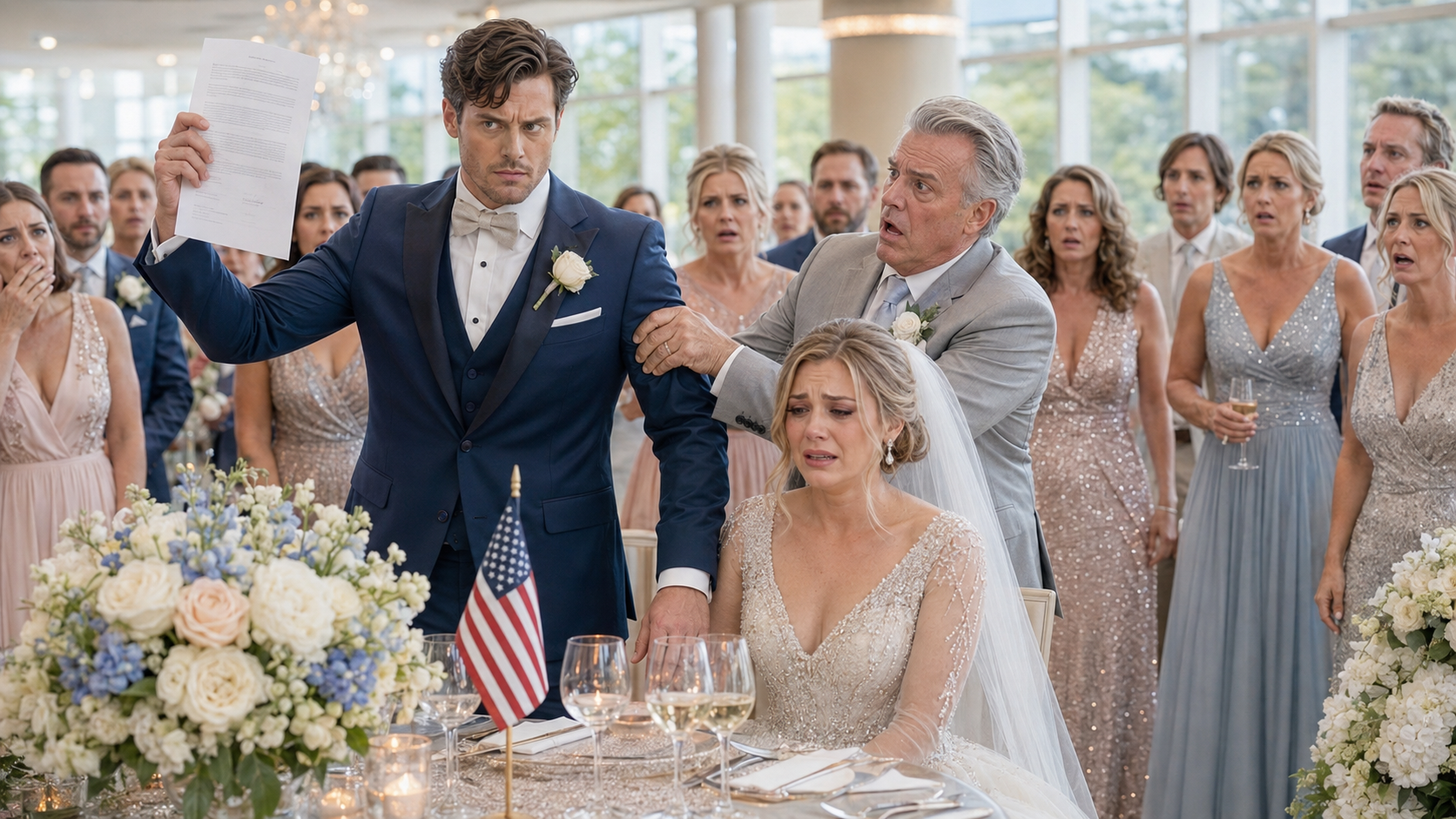
The room became completely silent.
Julian unfolded the paper.
“I wasn’t planning to talk about Maya’s parents tonight,” he began. “But over the last several weeks, many people here have heard different versions of why they are absent.”
Several relatives shifted in their seats.
“So I think Maya deserves something she has rarely received in this situation.”
He paused.
“The truth without editing.”
Then he read my father’s words.
Not the entire email.
Only the most important pieces.
“You have always been jealous of the attention Chloe receives…”
A murmur moved through the room.
“This wedding has become another opportunity for you to force everyone to center themselves around you…”
My aunt Denise covered her mouth.
Julian continued.
“If you proceed with the wedding on September 12, you should understand that your mother and I will not attend…”
Then:
“Perhaps when you look at the empty seats reserved for us, you will finally understand that actions have consequences.”
Nobody moved.
Nobody laughed.
Nobody whispered.
Julian lowered the page.
Then he reached into his pocket again.
Another sheet.
My heart pounded.
“I also received a few messages Maya’s grandmother believed she should know existed.”
Grandma Eleanor calmly sipped her wine.
Julian read:
“Missing the ceremony is the only way Patricia and I can make her understand how serious this is.”
Then:
“Once the embarrassment passes, she’ll come around. Maya has always been desperate for our approval.”
A sound went through the crowd.
Not quite a gasp.
Something heavier.
Julian folded the pages.
Then looked directly at me.
“Maya spent weeks wondering whether she had done something wrong by refusing to move our wedding because her sister booked a vacation.”
He turned toward the guests.
“I want to say this once, clearly, because nobody should leave tonight confused.”
His voice remained calm.
“Maya did not exclude her parents.”
He gestured toward the lawn.
“Their names were on those chairs.”
He paused.
“They chose not to sit in them.”
Silence.
Then Julian looked back at me.
“And Maya, if there is one thing I hope you remember from today, it’s this.”
His voice softened.
“Empty chairs are not proof that you were unloved.”
My eyes filled.
“Sometimes they are proof that someone believed their absence would control you.”
A tear slipped down my cheek.
Julian smiled.
“And they were wrong.”
The entire room erupted.
People stood.
Applause thundered through the reception space.
I covered my face.
Serena was crying.
Aunt Denise was crying.
Even Julian’s father wiped his eyes.
Grandma Eleanor simply nodded.
But Julian wasn’t finished.
He raised his glass.
“So tonight, I’d like everyone to stop thinking about the people who chose not to come and celebrate the woman who chose not to disappear.”
The applause grew louder.
I stood.
Julian wrapped one arm around me.
And in that moment, something inside me finally broke.
Not my heart.
The chain.
The invisible chain connecting my worth to my father’s approval.
For thirty-one years, I had believed that if I could just be easier, quieter, more forgiving, more mature, more accommodating, eventually I would be treated equally.
Standing in that room, surrounded by people who had rearranged flights, driven hundreds of miles, taken time away from work, and shown up simply because they loved us, I finally understood the obvious truth.
People who want to be there find a way to be there.
People who want control find excuses.
The rest of the reception became joyful chaos.
We danced.
We laughed.
Someone convinced Grandma to return to the dance floor.
At midnight, the band played our final song.
I didn’t check my phone until Julian and I returned to our suite.
There were thirty-seven notifications.
Most were congratulations.
Then I saw Chloe’s name.
Six messages.
Apparently, someone at the reception had uploaded part of Julian’s speech to social media.
One of Chloe’s friends had seen it.
The messages began angrily.
Did Julian seriously read Dad’s PRIVATE email in front of everyone???
Then:
This is humiliating.
Then:
Mom is crying.
Then:
Dad is furious.
Then:
You crossed a line.
The final message had arrived three minutes earlier.
Call me NOW.
I stared at the screen.
Julian loosened his tie.
“You okay?”
I handed him the phone.
He read the messages.
“What do you want to do?”
I thought about it.
Then typed:
I’m enjoying my wedding night. We can talk after you return.
I turned the phone off.
That might have been the first peaceful sleep of my adult life.
Three days later, Julian and I left for our honeymoon.
My parents remained in Bali with Chloe.
I knew because other relatives told me.
Dad apparently spent most of the first two days furious about the speech.
He called Uncle Raymond.
He called Aunt Denise.
He called Grandma Eleanor.
That conversation did not go well for him.
Grandma told me about it later.
Dad accused her of betraying him by sharing screenshots with Julian.
She replied, “Robert, the embarrassing part wasn’t that people read what you wrote. The embarrassing part was that you wrote it.”
He hung up.
Meanwhile, Chloe’s trip was not producing the glamorous career breakthrough everyone had predicted.
The woman with the hotel connections turned out to be a junior public relations contractor.
There was no partnership.
No international campaign.
No life-changing opportunity.
It was exactly what I had called it from the beginning.
A luxury vacation with friends.
I took no pleasure in that.
But I also refused to pretend it had justified everything.
Two weeks after the wedding, my parents returned home.
My father called me the following morning.
I didn’t answer.
He called again.
Then again.
Finally, he left a voicemail.
“Maya, we need to discuss what happened. Your husband publicly humiliated this family, and I expect an explanation.”
I deleted it.
My mother called that evening.
I answered.
She sounded exhausted.
“Maya.”
“Hi, Mom.”
There was a pause.
“Your father is extremely upset.”
“I know.”
“What Julian did was unacceptable.”
“What Dad wrote was unacceptable.”
“That email was private.”
“So was the family disagreement until Dad started calling relatives and telling them I deliberately sabotaged Chloe.”
Silence.
“Maya, he was hurt.”
“So was I.”
“He’s your father.”
“I’m his daughter.”
Another silence.
My mother’s voice changed.
Softer.
“Do you have any idea how painful it was seeing videos of your wedding?”
That question almost stunned me.
“Yes,” I said.
She inhaled sharply.
“You do?”
“Yes, Mom. Because you were invited to be there.”
She began crying.
Normally, that sound would have immediately made me apologize.
This time, I stayed quiet.
“I wanted to come,” she whispered.
“Then why didn’t you?”
“You know why.”
“No. I know the excuse. I’m asking why.”
She didn’t answer.
“Chloe was already going to Bali,” I said. “You and Dad didn’t have to go with her.”
“She was upset.”
“So was I.”
“She needed support.”
“So did I.”
“Maya—”
“No, Mom. For once, I need you to hear the entire sentence.”
She went silent.
“You missed your daughter’s wedding because Dad decided your absence would teach me a lesson.”
“That isn’t fair.”
“He wrote it.”
“He was angry.”
“He wrote it more than once.”
My mother said nothing.
“You didn’t accidentally miss my wedding,” I continued. “You used missing it as punishment.”
Her breathing became uneven.
“I never wanted this.”
“Then why did you participate?”
Silence.
Long enough that I finally understood she had no answer.
Maybe she had never asked herself.
Eventually she whispered, “What do you want us to do?”
That was another question I had spent my whole life imagining.
I thought I would demand an apology.
Maybe ask them to admit Chloe was favored.
Maybe insist they make something up to me.
Instead, I felt strangely calm.
“I want space.”
“For how long?”
“I don’t know.”
“Maya…”
“I spent my wedding morning wondering whether my parents loved me enough to show up.”
Her voice broke.
“We love you.”
“I believe you think you do.”
“That’s cruel.”
“No. Cruel was telling your daughter that seeing your empty chairs would teach her humility.”
She cried quietly.
I closed my eyes.
“I’m not doing this to hurt you, Mom. I just can’t keep having the same relationship with you and pretending it’s normal.”
“What relationship?”
“The one where Chloe’s wants become emergencies and mine become inconveniences.”
“She’s your sister.”
“And I’m your daughter.”
Neither of us spoke.
Finally, Mom said, “I’m sorry you feel that way.”
There it was.
The almost-apology.
I sighed.
“I have to go.”
She didn’t stop me.
A week later, Chloe showed up at my house.
No warning.
Julian was working late.
I opened the door and found her standing there holding two coffee cups.
She looked different from the Bali photos.
Tired.
No makeup.
Hair tied back.
“Can we talk?”
I almost said no.
Then stepped aside.
She entered.
For several minutes, we sat across from each other in the living room.
She handed me a coffee.
“I remembered your order.”
“That’s impressive.”
She gave me a weak smile.
“I deserved that.”
I didn’t respond.
She looked down.
“Dad is losing his mind.”
“I’m aware.”
“Mom keeps crying.”
“I’m aware of that too.”
Chloe twisted the cardboard sleeve around her cup.
“I watched the speech.”
My shoulders tightened.
“All of it?”
“Three times.”
I waited.
“At first, I hated Julian.”
“That seems dramatic.”
She looked at me.
Then laughed unexpectedly.
“Okay. Definitely deserved that one.”
The tension eased slightly.
Then she became serious.
“I didn’t know Dad said those things.”
“You knew he threatened not to come.”
“Yes.”
“You knew why.”
“Yes.”
“So what exactly didn’t you know?”
She looked ashamed.
“That he was trying to embarrass you.”
I said nothing.
“I thought he was bluffing,” she continued. “I thought eventually you’d move it.”
“Exactly.”
She flinched.
I leaned back.
“You all thought I would move it.”
“Yes.”
“Because I always do.”
She looked down.
“Yes.”
That answer hurt more than denial would have.
“Do you know how messed up that is?”
“I do now.”
I laughed quietly.
“Convenient.”
“I know.”
Another silence.
Then she said, “The Bali thing wasn’t professional.”
I raised an eyebrow.
“I guessed.”
“There was maybe a possibility of a collaboration. Maybe. But mostly…”
“It was a vacation.”
She nodded.
“Yes.”
“Did Mom and Dad know?”
She hesitated.
“Not exactly.”
“What did you tell them?”
“That Kayla knew people in hospitality and we were going to discuss content opportunities.”
“That sounds exactly like what Dad told me.”
“I exaggerated.”
I stared at her.
“How much?”
She looked miserable.
“A lot.”
I stood and walked toward the window.
Behind me, Chloe continued.
“When I realized the trip overlapped with your wedding, I panicked.”
“So you canceled it?”
“No.”
“Clearly.”
“I told Mom.”
“And Mom called me.”
“Yes.”
“You could have told them you made a mistake.”
“I know.”
“But instead, you let them pressure me to move my wedding.”
She swallowed.
“Yes.”
“Why?”
Her answer came so quietly I nearly missed it.
“Because I thought you would.”
I turned.
She was crying.
Not dramatically.
Not performatively.
Just quietly.
“I thought you’d be annoyed,” she said, “and then you’d fix it because you always fix things.”
Something about that honesty cut straight through me.
She continued.
“When Dad started saying you were selfish, I didn’t stop him. When Mom said they wouldn’t go, I thought it was stupid, but I still didn’t stop them.”
“Why?”
“Because having them on my side felt good.”
There it was.
The ugliest truth.
And maybe the first honest thing she had ever said about us.
Chloe wiped her face.
“I know that’s horrible.”
“It is.”
“I’m sorry.”
I looked at her.
Not “I’m sorry you feel that way.”
Not “I’m sorry things got complicated.”
Just:
“I’m sorry.”
She stood.
“I’ve been thinking about how many times they did this.”
My chest tightened.
“You noticed?”
“I noticed more than I admitted.”
She gave a humorless laugh.
“It benefited me, Maya.”
I couldn’t speak.
“When I was younger, I convinced myself you didn’t care. You were independent. You had friends. You were good at school. You always figured things out.”
“So that made it okay?”
“No.”
She shook her head.
“It made it easy to ignore.”
We talked for nearly two hours.
For the first time in our adult lives, Chloe didn’t defend herself with excuses.
She admitted things.
The birthdays.
The graduation.
The money.
The family vacations that somehow always followed her preferences.
She told me she had grown accustomed to being rescued.
“I think they made me worse,” she said.
I looked at her.
“Don’t put all of it on them.”
She nodded.
“You’re right.”
That mattered.
Before leaving, Chloe stood at the door.
“I don’t expect you to forgive me right now.”
“I don’t.”
“I know.”
She looked down.
“I’m going to talk to Dad.”
“About what?”
“About everything.”
I almost warned her not to.
Then stopped.
She was twenty-seven.
It was time for both of us to stop playing assigned roles.
The confrontation happened the following Sunday.
I wasn’t there.
Grandma Eleanor was.
According to her, Chloe went to my parents’ house and admitted that the Bali trip had never been a major professional opportunity.
Dad exploded.
Not because she had exaggerated.
Because her admission destroyed his justification.
“So Maya was right?” he demanded.
Chloe said yes.
Dad accused her of humiliating him.
Grandma apparently laughed at that.
Dad turned on her.
“This isn’t funny.”
Grandma replied, “No, Robert. It became funny three excuses ago.”
Then Chloe told them something nobody expected.
She said she was tired of being the reason everyone hurt Maya.
Mom began crying.
Dad insisted he had always treated us equally.
Grandma asked him to name one major event in Chloe’s life that I had intentionally skipped to punish her.
He couldn’t.
Then she asked him to name one of mine he had skipped.
Everyone went silent.
The wedding.
The answer sat in the room.
A week passed.
Then an envelope arrived.
My father’s handwriting.
I almost threw it away.
Julian saw it on the counter.
“You don’t have to open that.”
“I know.”
Eventually, I did.
The letter was four pages.
My father did something I had rarely seen him do.
He apologized without defending himself.
At least, mostly.
He admitted that he had expected me to move the wedding.
He admitted that he used his attendance as leverage.
He admitted the empty-chair comment had been designed to hurt me.
Then he wrote:
The hardest thing for me to accept is that Julian did not make me look cruel. He simply read what I had written. I have spent weeks being angry about the humiliation while avoiding the fact that the humiliation came from hearing my own behavior described without the excuses I normally attach to it.
I stopped reading for several seconds.
Then continued.
Your grandmother told me that I have confused authority with respect for most of my life. I wanted to argue with her. Instead, I started remembering things.
He mentioned my sixteenth birthday.
My graduation.
A college scholarship ceremony he missed because Chloe was upset after a breakup.
Things I had not even told Julian about.
Then:
I thought you were the child who needed less because you asked for less. I now understand that you learned to ask for less because we repeatedly showed you what happened when your needs conflicted with your sister’s.
My eyes filled.
The final paragraph was short.
I am sorry I missed your wedding.
Not because people criticized me.
Not because Julian read the email.
Because I should have been sitting in that chair.
You deserved a father who wanted to be there more than he wanted to be right.
I folded the letter.
Julian sat beside me.
“Was it okay?”
“I don’t know.”
That was the truth.
An apology doesn’t instantly repair thirty-one years.
But it can be a door.
The question was whether I wanted to open it.
I waited another month before meeting my parents.
Public place.
Small café.
Julian offered to come.
I said no.
Not because I didn’t want his support.
Because this was something I needed to do myself.
My parents were already seated when I arrived.
Mom stood immediately.
She looked like she wanted to hug me.
She stopped herself.
I appreciated that.
Dad looked smaller somehow.
Not physically.
Just less certain.
I sat.
For several moments, none of us spoke.
Then Dad said, “Thank you for coming.”
I nodded.
Mom’s eyes filled.
“We missed so much.”
I looked at her.
“Yes.”
She swallowed.
“I’m sorry.”
This time, she didn’t add anything afterward.
Dad folded his hands on the table.
“I’ve been trying to think of what I can say that doesn’t sound like I’m trying to excuse it.”
“Then don’t explain.”
He nodded.
“You’re right.”
We talked for ninety minutes.
There was no dramatic reunion.
No instant forgiveness.
No hug accompanied by swelling music.
Real repair is much less cinematic.
It is awkward.
Slow.
Uncomfortable.
I told them I would no longer participate in family decisions where I was automatically expected to sacrifice because I was older.
I told them never to use attendance, affection, money, or silence to punish me again.
I told them Julian was not responsible for damaging our family.
Dad visibly struggled with that one.
Then finally said, “I know.”
I told them Chloe and I were rebuilding our relationship separately.
They didn’t get to manage that.
Mom nodded.
Dad asked, “Do you think you can forgive us?”
I thought carefully.
“Eventually.”
He looked disappointed.
Then nodded.
“That’s fair.”
Six months after the wedding, Julian and I received our photo album.
We sat together on the couch one Saturday morning and turned through the pages.
Getting ready.
Flowers.
Grandma.
The vineyards.
My walk down the aisle.
Our vows.
Our first kiss.
Then we reached a wide photograph of the ceremony.
Two hundred guests.
Bright afternoon light.
White flowers.
And in the front row, two empty chairs.
Patricia Sterling.
Robert Sterling.
Julian looked at me.
“Do you want that one removed?”
I studied it.
Months earlier, the image would have devastated me.
Now I saw something different.
Grandma standing near the aisle.
Serena smiling.
Julian waiting for me.
Every other chair filled.
“No,” I said.
“Keep it.”
“You sure?”
“Yes.”
Because those empty chairs had stopped representing rejection.
They represented a boundary.
A moment when someone tried to use absence as punishment and discovered that my life continued anyway.
A year after our wedding, my parents invited Julian and me to dinner for our anniversary.
Dad was quieter than usual.
At the end of the meal, he handed us a small wrapped package.
Inside was a silver picture frame.
The photograph inside showed Julian and me walking back down the aisle after the ceremony.
Both of us laughing.
Dad cleared his throat.
“I know I wasn’t there.”
I looked up.
He continued.
“I can’t change that.”
“No.”
“But I wanted you to know something.”
His voice cracked slightly.
“I don’t look at those empty chairs anymore and think you were disrespectful.”
He paused.
“I look at them and remember what my pride cost me.”
I didn’t know what to say.
So I reached across the table and took his hand.
Not because everything had been repaired.
Not because history disappeared.
But because he had finally stopped demanding that I carry all of it alone.
Chloe changed too.
Slowly.
She became less dependent on our parents.
She stopped calling me only when she needed something.
She started asking about my life and actually listening to the answer.
On my thirty-third birthday, she organized a dinner.
Halfway through the evening, someone asked her about a new brand campaign.
She started answering.
Then stopped herself.
She looked at me.
“Actually, tonight is Maya’s night. I’ll tell you later.”
It was such a small thing.
Nobody else probably noticed.
I did.
I smiled.
She smiled back.
Sometimes change doesn’t arrive through grand gestures.
Sometimes it arrives through someone finally allowing you to finish your own birthday dinner.
Years later, people still occasionally asked about Julian’s wedding speech.
Some called it savage.
Some called it brave.
One cousin jokingly called it “the Napa Valley Declaration of Independence.”
But when I think about that night, I don’t remember my father’s email first.
I remember walking toward Julian.
I remember Grandma’s hand around mine.
I remember the moment she stopped and told me to finish the aisle myself.
I remember realizing that walking alone and being abandoned were not the same thing.
Most importantly, I remember the instant Julian said:
“They chose not to sit in those chairs.”
Because that sentence finally separated their decision from my worth.
I had spent my entire childhood believing that whenever someone I loved withdrew affection, I must have done something to deserve it.
The wedding taught me otherwise.
Sometimes people withdraw love, attention, approval, or presence because they expect the loss to make you easier to control.
Sometimes they call obedience respect.
Sometimes they call surrender maturity.
Sometimes they call your boundaries selfishness because your boundaries inconvenience them.
And sometimes the most important thing you can do is leave the date exactly where it is.
Let them make their choice.
Then make yours.
My wedding went ahead on September 12.
The flowers bloomed.
The band played.
Two hundred people celebrated.
The food was eaten.
The photographs were taken.
I married the man I loved.
The world did not collapse because my parents refused to attend.
And my father’s prediction did come true in one way.
I did look at those two empty chairs.
I learned something.
Just not what he intended.
They didn’t teach me humility.
They taught me that love requiring me to constantly erase myself was never the kind of love I wanted to build my future around.
They taught me that respect runs both directions.
They taught me that family harmony purchased by one person’s endless sacrifice isn’t harmony.
It is silence.
And most of all, they taught me that the moment you stop begging people to choose you is often the moment you finally begin choosing yourself.
Julian still keeps a copy of my father’s email.
Not framed.
Not displayed.
Not treated like a trophy.
It sits inside a folder with our wedding contracts, receipts, and old planning notes.
One evening, years later, I found it while looking for something else.
I unfolded the paper.
The words that once shattered me looked strangely powerless.
Perhaps when you look at the empty seats reserved for us, you will finally understand that actions have consequences.
I smiled.
Dad had been right about one thing.
Actions do have consequences.
His decision cost him a moment he could never recreate.
My decision gave me something I had never truly possessed before.
The freedom to stop proving that I deserved a place in my own family.
I folded the paper again and put it away.
Then I went downstairs.
Julian was in the kitchen making dinner.
Our daughter was sitting on the counter beside him, carefully stealing shredded cheese whenever she thought he wasn’t looking.
He caught her.
She giggled.
He pretended not to notice.
I stood in the doorway watching them.
Julian looked over.
“You okay?”
I smiled.
“Yeah.”
And I meant it.
Because somewhere between those two empty chairs and the life we built afterward, I finally learned that family isn’t defined by who demands the biggest sacrifice.
It is defined by who shows up.
Who listens.
Who apologizes.
Who changes.
Who leaves room for you at the table without requiring you to become smaller before you sit down.
And on the most important day of my life, my parents left two chairs empty because they believed absence would teach me my place.
Instead, those empty chairs finally taught me that my place was never beneath anyone.
It was beside the people who loved me enough to stay.
💬THE END! THANK YOU FOR READING!