The receptionist checked the screen again.
“No mistake, sir. In fact, Ms. Patterson’s reservation includes something the rest of your family’s rooms do not.”
Dad slowly turned toward me.
“What exactly did you book?”
I looked at the receptionist.
“You can tell him.”
She hesitated for half a second before answering.
“Ms. Patterson is staying in the Lakeside Presidential Suite.”
Nobody spoke.
Even the soft piano music drifting through the lobby suddenly seemed too loud.
Brittany’s expression changed first.
She gave a little laugh, but this time there was nothing amused about it.
“That’s impossible.”
The receptionist remained polite.
“The reservation was made four months ago and paid in full.”
Derek stepped closer.
“How much is that room?”
The receptionist looked at me rather than him.
I nodded.
“Approximately twenty-four hundred dollars per night before taxes and additional services.”
My mother’s mouth opened.
Charlotte stared at me.
Dad looked from the receptionist to me as if I had suddenly started speaking another language.
“You spent that much money on a hotel room?”
“I booked what I wanted.”
“For Grandma’s anniversary?”
“Yes.”
Brittany crossed her arms.
“That makes no sense.”
I picked up my suitcase.
“It doesn’t have to make sense to you.”
Then the receptionist added, “Your concierge has also confirmed the private dining reservation for Sunday morning, Ms. Patterson.”
Dad’s face tightened.
“What private dining reservation?”
I smiled at the receptionist.
“Thank you. I’ll handle the rest.”
She handed me two room keys inside a thick cream envelope.
Then she gestured toward a bellman standing nearby.
“He’ll take you upstairs whenever you’re ready.”
I thanked her.
As I turned away, Derek caught my arm lightly.
“Maya.”
I looked down at his hand.
He removed it.
“What is going on?”
“Nothing.”
“You booked a presidential suite.”
“Yes.”
“You drive a fifteen-year-old Subaru.”
“Fourteen.”
He stared at me.
I almost smiled.
Behind him, Brittany whispered something to Charlotte.
Dad stepped forward.
“This is exactly what I was afraid of.”
I looked at him.
“And what exactly were you afraid of?”
“That you’d do something reckless just to prove you belong here.”
The words hit harder than they should have.
Maybe because they had been repeated in different forms my entire adult life.
When I became a preschool teacher, Dad called it “a sweet starter job.”
When I stayed in teaching, he called it “comfortable.”
When I turned down a corporate education job in Chicago, he called it “a lack of ambition.”
When Derek bought his first luxury SUV, Dad took pictures beside it.
When I bought my Subaru used and paid cash, Dad asked whether I needed help.
I never did.
But somehow that bothered him more than if I had.
I looked directly at him.
“I didn’t book the suite to prove I belong.”
“Then why?”
“Because I wanted it.”
He actually looked offended by that answer.
Dad believed expensive things required explanations when I bought them but became self-explanatory when Derek did.
Brittany stepped closer.
“Did you take out a loan?”
I turned toward her.
“No.”
“Put it on a credit card?”
“No.”
“Borrow from somebody?”
“No.”
She glanced at my old suitcase.
“Then where did the money come from?”
I smiled.
“That’s a very personal question to ask somebody you were just trying to send home.”
Her cheeks colored.
Derek sighed.
“Come on, Maya. We’re family.”
I laughed.
Five minutes earlier, I had been an embarrassment.
Now we were family.
Interesting how quickly biology became important when money entered the room.
“I’m going upstairs.”
Dad blocked my path.
“No. We’re finishing this conversation.”
The bellman looked uncomfortable.
Mom touched Dad’s arm.
“Gerald, people are watching.”
He lowered his voice.
“Maya, if you’ve gotten yourself into financial trouble, I need to know now.”
“I’m not in trouble.”
“How much do you have in savings?”
I stared at him.
“Excuse me?”
“If you spent ten thousand dollars on a weekend—”
“I didn’t spend ten thousand dollars.”
Dad gave a humorless laugh.
“Then what did you spend?”
I thought about answering.
Instead, I said, “Enough.”
Then I walked toward the elevators.
The bellman followed with my suitcase.
For the first time since I had arrived, nobody laughed.
My suite was on the top floor.
It faced the lake.
The bellman opened the door and stepped aside.
I had seen pictures online, but the actual room was brighter and larger than I expected.
Floor-to-ceiling windows.
A stone fireplace.
Cream-colored sofas.
A dining table for eight.
A bedroom with another panoramic lake view.
Fresh white roses sat near the windows.
On the table was a card from the hotel manager.
Welcome back, Ms. Patterson.
Thank you again for choosing Grand View Resort for this special celebration.
I placed the card facedown.
The truth was, I had been to the resort before.
Twice.
Neither time had anything to do with my family.
Three years earlier, my friend Naomi and I had brought a group of early-childhood education directors to Lake Geneva for a professional retreat.
The second trip happened the following year.
But my family did not know that.
They did not know much about my life at all.
They knew the easy version.
Maya, the preschool teacher.
Maya, the one who still drove an old Subaru.
Maya, the unmarried daughter who rented a modest townhouse.
Maya, the one who bought dresses at outlet stores and brought homemade food to family gatherings.
They had never asked what I did outside the classroom.
They had never asked why I sometimes traveled to education conferences.
They had never asked why my school director introduced me to visiting teachers as “one of the best curriculum designers in the state.”
And they definitely did not know what had happened five years earlier when I had started building something at my kitchen table after work.
I unpacked slowly.
At twenty-eight, I had created a set of literacy activities for preschoolers who struggled with language development.
Nothing fancy.
Just picture cards, movement games, story prompts, and routines I used with my own students.
Our school director loved them.
Then another teacher asked if she could use them.
Then another school.
I uploaded the materials online for twenty-nine dollars.
The first month, I made one hundred and eighty-seven dollars.
I remember staring at the number like I had won the lottery.
The next month, I made four hundred.
Within a year, I had built an online library of early-learning resources.
Then came training videos.
Then licensing agreements.
Then school districts.
Then a small publishing company in Minneapolis contacted me.
I nearly deleted the email because I thought it was spam.
That deal changed everything.
I continued teaching because I loved teaching.
I loved the smell of crayons and tempera paint.
I loved watching children learn to write their names.
I loved hearing a four-year-old explain something with the absolute confidence of a Supreme Court justice.
I loved my classroom.
The money never changed that.
But it changed my bank account.
Slowly at first.
Then dramatically.
My father had once told me that “real money should make a person look successful.”
I never agreed.
Real money, to me, meant freedom.
It meant paying off my student loans.
It meant buying my townhouse.
It meant helping my best friend when her husband got sick.
It meant setting aside enough that I never had to stay in a job because I was afraid of missing rent.
It meant not caring whether my car impressed a valet.
I was making more than Derek.
Much more.
And nobody in my family had any idea.
My phone buzzed.
A message from Grandma.
Where are you? Grandpa keeps asking if our favorite troublemaker arrived.
I smiled.
I typed back.
Upstairs. I’ll come find you.
Three dots appeared.
Your father bothering you already?
I laughed.
Grandma knew everybody.
Always had.
A minute later, another message came.
Come to our room before dinner. I saved something for you.
I changed into a pale blue dress and went downstairs.
Grandma and Grandpa’s room was on the sixth floor.
Grandpa opened the door wearing khaki pants and one of those shirts with tiny sailboats that he had worn since the 1990s.
“Maya!”
He pulled me into a hug.
No questions about money.
No comments about my car.
No inspection of my dress.
Just joy.
That almost broke me.
Grandma appeared behind him.
She was eighty-one and still wore lipstick before breakfast.
“There she is.”
I hugged her carefully.
She smelled like rose lotion and the peppermint candies she always carried in her purse.
“You look beautiful,” she said.
“So do you.”
“Obviously.”
Grandpa laughed.
Grandma led me toward the sofa.
On the coffee table sat an old photograph.
It showed Grandma and Grandpa standing beside a lake in 1964.
Grandma was twenty-one.
Grandpa was twenty-three.
They had borrowed a car from Grandpa’s cousin to take their honeymoon.
They spent two nights at a tiny motel because they could not afford anything else.
“This is what I wanted you to see,” Grandma said.
I picked up the photo.
“I’ve seen this before.”
“Yes, but nobody else remembers where it was taken.”
I looked closer.
Behind them was a low building and a wooden dock.
“Lake Geneva?”
Grandma smiled.
“Three miles from this resort.”
I looked at her.
She squeezed my hand.
“Your grandfather promised me that someday he’d bring me back when we could afford the fancy place.”
Grandpa sat beside her.
“Took me sixty years.”
“You could have come earlier,” I said.
Grandma shrugged.
“Life happened. Children. Mortgages. Medical bills. College. Weddings.”
Grandpa looked toward the window.
“And your father’s business needed money more than we needed a fancy vacation.”
That caught my attention.
Dad rarely talked about how he started his company.
His version involved discipline, hard work, and risk.
Apparently it also involved Grandma and Grandpa.
Grandma leaned closer.
“Don’t ever confuse having money with having value, Maya.”
I swallowed.
“Did Dad tell you what happened downstairs?”
“He didn’t need to.”
Grandma’s eyes sharpened.
“Brittany texted your mother about your room. Your mother texted Charlotte. Charlotte accidentally sent a message about it to the family chat.”
I laughed.
“Of course she did.”
Grandpa grinned.
“So apparently our preschool teacher is secretly the Queen of Wisconsin.”
I shook my head.
“Not quite.”
Grandma touched the photograph.
“I know you’re doing well.”
I looked at her.
“How?”
“You forget I read.”
That was all she said.
Grandma had apparently found an article about my curriculum company online two years earlier.
She had never mentioned it.
“Why didn’t you tell Dad?”
“Because it wasn’t my story to tell.”
That sentence stayed with me.
Not my story to tell.
My father acted as if every detail of my life belonged to him.
Grandma understood boundaries better at eighty-one than he did at sixty-three.
We talked until dinner.
Then the three of us went downstairs together.
The family had reserved a private dining room overlooking the lake.
There were twenty-two of us.
Aunts.
Uncles.
Cousins.
Derek and Brittany.
Charlotte and her husband.
My parents.
The atmosphere changed when I walked in.
People knew.
Of course they knew.
Families can spread information faster than emergency services.
My cousin Emily hugged me.
“Nice room, apparently.”
I laughed.
“Apparently.”
My uncle Mark raised his wineglass.
“Can I visit?”
“Only if you behave.”
Derek watched from across the room.
Brittany did not look at me at all.
Dad waited until Grandma and Grandpa were seated before approaching.
“We need to talk privately.”
“No.”
His eyebrows lifted.
“What?”
“I’m here for Grandma and Grandpa. I’m not spending the evening explaining my finances.”
“Maya.”
Grandma looked over.
“Gerald.”
Dad immediately stopped.
Grandma did not raise her voice.
She never needed to.
“This weekend is about me and your father.”
Dad nodded.
“Of course.”
“Then act like it.”
Grandpa hid a smile behind his wineglass.
Dinner was almost peaceful.
Almost.
Until the waiter brought menus.
Brittany looked at the prices, then looked toward me.
“You know,” she said loudly, “people can make surprising choices when they want to appear successful.”
The room became quiet.
Derek whispered, “Brittany.”
“What? I’m just saying.”
She looked directly at me.
“I hope nobody feels pressured to overspend because everyone else is having a nice weekend.”
I put down my menu.
“You seem very worried about my money.”
She smiled tightly.
“I’m worried about family.”
“No. You’re curious.”
Her smile disappeared.
I continued.
“There’s a difference.”
Mom intervened.
“Maya, let’s not make this unpleasant.”
I turned toward her.
“I didn’t start this conversation.”
Dad took a breath.
“Fine. Since everyone apparently knows about the room, I’ll say it plainly. I think spending that kind of money when you work in childcare is irresponsible.”
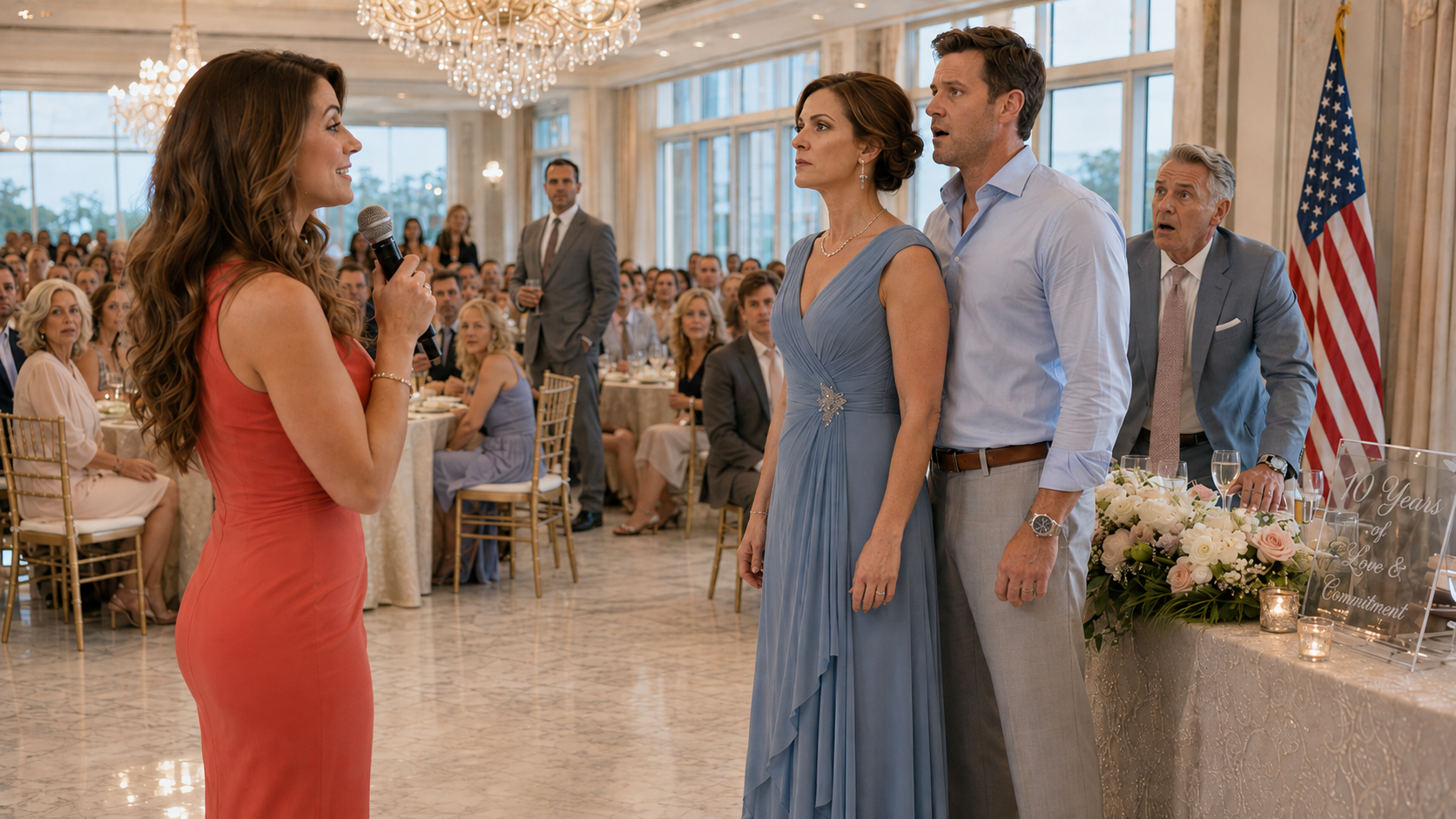
Grandpa slowly set down his fork.
The room went silent again.
Dad continued.
“I’m your father. I’m allowed to be concerned.”
I asked, “How much do I make?”
He blinked.
“What?”
“You keep talking about what I can afford. How much do I make?”
He looked irritated.
“I don’t know. Forty thousand? Forty-five?”
I nodded.
“What are my monthly expenses?”
“Maya—”
“How much debt do I have?”
He looked away.
“How much is left on my mortgage?”
Nobody moved.
“What’s my credit score?”
Dad frowned.
“That’s not the point.”
“It is exactly the point.”
I leaned back.
“You have formed an entire opinion about my finances without knowing a single number.”
Brittany folded her napkin.
“We know you’re a preschool teacher.”
“Yes.”
“And preschool teachers don’t make presidential-suite money.”
“No.”
She looked triumphant.
I smiled.
“But preschool teaching isn’t my only income.”
Derek stared at me.
“What does that mean?”
Grandma lifted her wineglass.
I could almost hear her thinking, Finally.
I looked around the table.
“I create early-learning curriculum.”
Charlotte shrugged.
“We know. You make worksheets.”
I almost laughed.
“Not exactly.”
I took a breath.
“Five years ago, I started selling classroom materials online. That grew into training programs and licensing agreements. Two years ago, I signed a publishing partnership. Last year, school districts in eleven states licensed my literacy program.”
Nobody said anything.
Derek finally asked, “What kind of money are we talking about?”
Dad shot him a look.
I smiled.
“Enough to afford the hotel.”
Brittany laughed again.
“That doesn’t mean anything.”
I looked at her.
“You’re right.”
I picked up my water.
“So let’s leave it there.”
That bothered them more than any number could have.
Money is strange.
People can dismiss you when they think you have none.
But once they suspect you have some, they suddenly feel entitled to know exactly how much.
Dinner moved on.
Grandpa told stories about his first job.
Grandma corrected every detail.
My cousins laughed.
Eventually the mood recovered.
After dessert, the hotel manager entered the room.
Her name was Claire.
I had worked with her during my previous retreats.
She greeted Grandma and Grandpa first.
Then she walked toward me.
“Ms. Patterson, everything is set for tomorrow morning.”
Dad looked up.
“What’s tomorrow morning?”
Claire smiled.
“The private anniversary breakfast.”
Grandma looked at me.
“You did something.”
“I might have.”
Grandpa laughed.
“What did you do?”
“You’ll see.”
Dad frowned.
“We already have brunch booked.”
Claire looked politely confused.
“Not tomorrow morning.”
Dad pulled out his phone.
“Yes, I arranged brunch for the whole family.”
Grandma waved her hand.
“Cancel it.”
Dad looked offended.
“Mom.”
“Maya arranged something.”
“We don’t even know what.”
“That’s why surprises are fun.”
The next morning, I woke before sunrise.
I made coffee in the suite and watched the lake turn from gray to gold.
At seven-thirty, my phone buzzed.
A text from Derek.
Can we talk?
I stared at it.
Then another.
Privately. No Brittany. No Dad.
I considered ignoring him.
Instead, I told him to come upstairs.
He arrived ten minutes later.
The moment he entered the suite, he looked around like an appraiser.
“This is insane.”
“Good morning to you too.”
He walked toward the windows.
“How much do you actually make?”
I laughed.
“You came here to ask that?”
“No.”
He turned.
“Okay. Yes. But not just that.”
I poured coffee.
He accepted a cup.
For a moment, neither of us spoke.
Then he said, “I was a jerk yesterday.”
I looked at him.
“That’s one way to describe it.”
“I thought you were trying to keep up.”
“With you?”
He winced.
“Yeah.”
“That’s your first mistake.”
He looked down at his coffee.
“I guess I never thought about what you were doing.”
“No one did.”
“That’s not fair.”
“It’s accurate.”
He walked toward the sofa.
“I thought you liked keeping life simple.”
“I do.”
“But you also have this company.”
“Yes.”
“How big?”
“Big enough.”
He sighed.
“You’re enjoying this.”
“A little.”
That made him laugh.
For the first time all weekend, he sounded like my brother instead of Dad’s younger clone.
Then his expression changed.
“I need to tell you something.”
I waited.
He sat down.
“Dad’s business is in trouble.”
I did not answer immediately.
Dad owned Patterson Commercial Design, a regional office-interiors company.
He had spent years presenting it as proof that discipline rewarded the right people.
“How bad?”
Derek rubbed his forehead.
“Bad enough.”
“You work there.”
“I know.”
“Does Mom know?”
“I don’t think she understands.”
He looked toward the windows.
“We lost two major contracts. Then Dad expanded the warehouse anyway because he thought things would turn around. The loans are crushing us.”
I stared at him.
“How long?”
“Almost a year.”
Suddenly Dad’s behavior made more sense.
Not kinder.
Just clearer.
People who are terrified about money often become obsessed with everyone else’s.
“Why are you telling me?”
Derek looked embarrassed.
“Because yesterday, when I saw your suite…”
I laughed softly.
“There it is.”
“I’m not asking for money.”
“You were thinking about it.”
He did not deny it.
I leaned against the counter.
“Derek, twenty-four hours ago you laughed at my car.”
“I know.”
“You asked how I could possibly afford to be here.”
“I know.”
“Your wife suggested I sit alone in my room so I wouldn’t make everyone uncomfortable.”
He closed his eyes.
“I know.”
“And now you’re here because you think I might be rich.”
“I said I’m not asking.”
“Then what are you asking?”
He took a long breath.
“I’m asking how you did it.”
That surprised me.
“What?”
“You built something without anyone knowing. You didn’t borrow from Dad. You didn’t show off. You just… did it.”
He looked genuinely lost.
“I’ve spent my entire life trying to impress him.”
I softened a little.
Derek had always been Dad’s favorite.
But favorites pay a price too.
They have to keep winning.
“I’m tired,” he said.
“Then stop performing.”
He looked at me.
“It’s not that easy.”
“It is. It’s just uncomfortable.”
We sat in silence.
Finally, I said, “I’m not rescuing Dad’s business.”
Derek nodded.
“I figured.”
“But if you want help reviewing your own finances or figuring out what you want outside the company, I’ll help you.”
His eyes changed.
“Seriously?”
“Yes.”
He gave a small laugh.
“After yesterday?”
“I didn’t say you weren’t an idiot.”
He laughed again.
Then he stood.
“Fair.”
Before he left, he paused at the door.
“For what it’s worth, I’m sorry.”
I believed him.
Not completely.
But enough.
At nine, the family gathered in the lobby.
A private shuttle took us down the lakeshore.
Grandma kept asking questions.
I refused to answer.
Ten minutes later, we arrived at a restored inn overlooking the water.
It was smaller than Grand View.
Older.
Quieter.
Grandma stepped out and froze.
Grandpa did too.
The building had once been the motel from their honeymoon.
It had been renovated decades earlier, but one section of the original structure remained.
Grandma covered her mouth.
“Oh my God.”
Grandpa stared at me.
“How did you find this?”
“The photograph.”
Grandma began crying before we even reached the entrance.
Inside, the dining room had been decorated with copies of old photographs from their marriage.
Their wedding.
Their first house.
My father as a baby.
Family holidays.
Graduations.
Birthdays.
Grandpa’s retirement.
There were sixty photographs.
One for every year.
At each place setting was a card printed with a memory from Grandma and Grandpa’s life.
I had contacted cousins, aunts, uncles, old family friends, and neighbors for months.
Some mailed pictures.
Some sent stories.
One of Grandpa’s old Army friends recorded a video message.
Grandma’s former coworker sent a letter.
Even the song playing softly in the room was their wedding song.
Grandma hugged me so tightly I could barely breathe.
“You did all this?”
“Yes.”
She looked around.
“This must have cost a fortune.”
I laughed.
“Grandma.”
She smiled through tears.
“Worth every penny.”
Dad stood nearby.
His expression was unreadable.
Then Grandpa walked toward him.
“You remember this place?”
Dad nodded.
“You brought us once when I was little.”
Grandpa smiled.
“We couldn’t afford to stay.”
Dad looked away.
That small moment carried more weight than I expected.
Because Dad had spent so much of his adult life pretending our family had always been comfortable.
Maybe he had forgotten.
Or maybe he needed to forget.
Breakfast lasted almost three hours.
There were speeches.
Stories.
Laughter.
Grandma cried four times.
Grandpa cried once and denied it twice.
Nobody talked about money.
Nobody talked about my car.
For those three hours, we were simply a family celebrating two people who had somehow managed to choose each other for sixty years.
Afterward, Dad found me outside near the water.
“Maya.”
I kept looking at the lake.
“Yes?”
He stood beside me.
“That was impressive.”
“Thank you.”
“I mean it.”
I nodded.
For Dad, that was practically poetry.
Then he said, “Derek told me he spoke with you.”
Of course he did.
I looked at him.
“About the business?”
Dad’s jaw tightened.
“He shouldn’t have.”
“Maybe not.”
He shoved his hands into his pockets.
For once, he looked older.
Not weak.
Just tired.
“I suppose you think I’m a hypocrite.”
I thought about lying.
“I think you’re scared.”
He glanced at me.
“That’s different.”
“Is it?”
He looked toward the water.
“The company will survive.”
“Maybe.”
His eyes sharpened.
“You don’t think so?”
“I don’t know enough to have an opinion.”
He nodded slowly.
Then he asked the question I had been expecting.
“How successful is your company?”
I smiled faintly.
“There it is.”
He frowned.
“I’m trying to understand.”
“No. You’re trying to calculate.”
“That’s unfair.”
“Yesterday you tried to cancel my hotel room.”
His face hardened.
“I thought you were making a mistake.”
“Because you assumed I was poor.”
“I never said poor.”
“You said I could embarrass the family.”
He looked away.
I continued.
“You didn’t ask if I was okay. You didn’t ask if I needed help. You decided my job made me incapable of paying for a room.”
“I’m your father.”
“That does not make every assumption loving.”
He was quiet.
Then he surprised me.
“I’m sorry.”
I turned toward him.
Dad rarely apologized.
When we were children, apologies from him usually sounded like, “I’m sorry you misunderstood.”
But this time he said it plainly.
“I was wrong.”
I waited.
He swallowed.
“I was arrogant.”
That was harder for him.
I could see it.
“I thought I understood your life because I knew your job title.”
I nodded.
“You don’t.”
“I’m realizing that.”
We stood there for a moment.
Then he asked, “How long have you been doing this?”
“Five years.”
“And you never told us.”
“I tried.”
He looked confused.
“When?”
“At Christmas four years ago. I told you I had started selling curriculum materials.”
He frowned as if searching his memory.
“You said it was a website.”
“It was.”
“What did I say?”
I looked at him.
“You told Derek that at least one of your children had a real business.”
Dad closed his eyes.
He remembered.
I could tell.
“Oh.”
“Yes.”
That one word seemed to hit him harder than anything else.
I looked back at the lake.
“After that, I stopped giving you updates.”
“Maya…”
“It was easier.”
He nodded slowly.
“I understand.”
“I don’t think you do yet.”
He accepted that.
Then, very quietly, he said, “I’d like to.”
That was the first real opening he had offered me in years.
I did not rush to fill it.
“I’m not investing in the company.”
He stiffened.
“I didn’t ask.”
“You were going to.”
He gave me a tired smile.
“Eventually.”
“I won’t.”
He nodded.
“Fair.”
“I also won’t lend money.”
“Understood.”
“But I know someone who specializes in restructuring small regional companies. If you want an introduction, I’ll make one.”
Dad looked at me.
“You would?”
“Yes.”
“Why?”
“Because there’s a difference between helping and rescuing.”
He was silent for a long time.
Then he said, “I’d appreciate the introduction.”
That afternoon, the family split into activities.
Some went golfing.
Some went to the spa.
I spent most of the afternoon with Grandma and two cousins by the lake.
Around four, Brittany appeared.
Alone.
She stood several feet away.
“Can I talk to you?”
My cousin Emily immediately stood.
“I suddenly need coffee.”
Grandma did not move.
Brittany looked uncomfortable.
Grandma smiled.
“I’m old. I don’t hear well.”
That was a lie.
Grandma could hear a candy wrapper open from two rooms away.
I laughed.
“What do you want, Brittany?”
She sat on the empty chair beside me.
For a few seconds she said nothing.
Then she looked at my sandals.
“I was rude yesterday.”
“Yes.”
“I judged you.”
“Yes.”
She frowned.
“You could make this easier.”
“I could.”
She sighed.
“I’m apologizing.”
“Then apologize.”
She looked at me.
“I’m sorry.”
I waited.
She added, “For laughing at your car.”
“And?”
“For implying you couldn’t afford the trip.”
“And?”
Her eyes narrowed.
Grandma sipped lemonade.
Brittany exhaled.
“And for acting like your job made you less successful than the rest of us.”
There it was.
“Thank you.”
She looked surprised.
“That’s it?”
“That’s what an apology is for.”
She nodded.
Then she looked toward the lake.
“I grew up with nothing.”
I had not known that.
“My dad left when I was six. My mom cleaned hotel rooms.”
Her voice changed.
“When I started making money, I promised myself nobody would ever look at me like I didn’t belong somewhere.”
I understood before she finished.
“So you became the person looking.”
Her eyes filled.
“Yes.”
Grandma quietly stood.
“I suddenly can hear perfectly and also need a nap.”
She walked away.
Brittany laughed through her embarrassment.
“I’m not asking you to forgive everything.”
“I don’t know you well enough to hate you.”
That made her laugh again.
She looked at my Subaru in the parking lot.
“Why do you still drive that thing?”
“Because it runs.”
“You could buy anything.”
“Probably.”
“A Porsche?”
“Yes.”
“A Mercedes?”
“Yes.”
“And you keep the Subaru?”
“I know where all the buttons are.”
She stared at me.
Then she burst out laughing.
For the first time, I liked her.
Not completely.
But enough to imagine that someday I might.
Saturday night was the formal anniversary dinner.
Grandma wore her pearls.
Grandpa wore a dark suit that made him complain for an hour.
The ballroom overlooked the lake.
Candles reflected in the windows.
After dinner, the family gave speeches.
Dad went first.
He talked about his parents’ marriage.
About sacrifice.
About consistency.
About how they had helped him start his company.
That last part surprised everyone.
Especially Derek.
Dad looked toward Grandpa.
“I’ve spent years telling people I built everything myself.”
Grandpa’s expression softened.
Dad continued.
“That was never true.”
He looked toward me.
“None of us builds anything alone. And sometimes pride makes us forget who helped us, who believed in us, or even who we failed to see clearly.”
My mother reached for his hand.
I knew the last sentence was meant for me.
It did not erase yesterday.
But it mattered.
Then Grandma stood.
She took the microphone.
“I’ve been married sixty years, so apparently people now think I have wisdom.”
Everyone laughed.
Grandma smiled.
“The truth is, I mostly have experience making mistakes and enough years behind me to recognize them faster.”
She looked around the room.
“Gerald spent yesterday worried Maya might embarrass the family.”
Dad covered his face.
Everyone laughed harder.
Grandma continued.
“And Maya spent today making this old woman cry every twenty minutes.”
I smiled.
Grandma lifted her glass.
“I would like to say something to all my grandchildren.”
The room quieted.
“Never measure people by what they wear, what they drive, what they earn, or how impressive their job sounds at dinner.”
She looked at Derek.
Then Charlotte.
Then me.
“Some people with beautiful houses are drowning in debt. Some people with old cars could buy the dealership. Some people with impressive titles are miserable. Some people doing ordinary work are changing lives every day.”
Her eyes found mine.
“A good life does not always look expensive.”
I had to look down.
Grandma continued.
“And if you have to make someone feel small to feel successful, then you are not successful.”
Nobody laughed at that.
Brittany stared at her hands.
Dad looked at me.
Derek reached for Brittany’s hand.
Grandma raised her glass.
“To sixty years of learning.”
We all stood.
“To sixty years.”
Later that evening, I stepped outside onto the terrace.
The lake was black beneath the moon.
Music drifted through the open doors.
Grandpa joined me.
“You know what your grandmother didn’t tell them?”
I smiled.
“What?”
“She hated that motel.”
I laughed.
“She did?”
“Terrible mattress. No air-conditioning. A man in the next room snored like a tractor.”
I leaned against the railing.
“But she remembers it.”
“Oh, she remembers everything.”
Grandpa looked toward the ballroom.
“Your father is proud of you.”
I shook my head.
“He’s confused by me.”
“Same thing for Gerald.”
I laughed.
Grandpa became serious.
“He grew up afraid of not having enough.”
“So did you.”
“Yes.”
“But you don’t treat people like that.”
Grandpa looked toward the lake.
“Fear makes different people do different things.”
He paused.
“Doesn’t excuse it.”
I appreciated that.
Too often older relatives explained bad behavior as if explanation erased damage.
Grandpa understood both could be true.
“You going to tell them how much you’re worth?” he asked.
“No.”
He grinned.
“Good.”
I looked at him.
“Why?”
“Drives them crazy.”
I laughed so loudly two people inside turned around.
Sunday morning, I woke to a message from Dad.
Can we have coffee before checkout?
I agreed.
We met downstairs.
He was already sitting near the windows when I arrived.
No golf shirt.
No expensive-watch display.
Just coffee.
“I called the consultant you recommended.”
“That was fast.”
“I didn’t sleep much.”
I sat down.
“He thinks the company can be saved.”
“That’s good.”
“He also thinks I need to sell the warehouse.”
I nodded.
Dad looked miserable.
“I built that place.”
“You borrowed money for that place.”
He almost smiled.
“You really are my daughter.”
“I’ve been trying to tell you.”
He stirred his coffee.
“There’s something else.”
I waited.
“I owe you an apology for more than Friday.”
I did not rescue him from the silence.
He continued.
“I’ve been dismissive of your work for years.”
“Yes.”
“I think part of it was because I didn’t understand it.”
“That’s not a good reason.”
“I know.”
He looked directly at me.
“And part of it was because your choices made me uncomfortable.”
I frowned.
“Why?”
“Because you never needed my approval.”
That surprised me.
He smiled sadly.
“Derek wanted my approval. Charlotte wanted my approval. You wanted me to stop giving advice.”
“That is accurate.”
He laughed.
“Every time you made a decision without me, I told myself it meant you weren’t ambitious.”
I thought about that.
“Maybe I just had different ambitions.”
“I see that now.”
He took a breath.
“What do you actually want, Maya?”
It was such a simple question.
My father had never asked it.
“I want to keep teaching three days a week.”
He nodded.
“I want to expand the literacy program.”
Another nod.
“I want to fund training for preschool teachers in rural districts.”
His eyebrows lifted.
“And someday I want a house near water.”
“Lake Geneva?”
“Maybe somewhere cheaper.”
He laughed.
Then he asked, “Marriage? Children?”
I smiled.
“Maybe. If it happens.”
He nodded.
No lecture.
No warning.
No comparison.
Just a nod.
Progress.
Before we left the café, he looked at me.
“I still hate that car.”
I laughed.
“That sounds like a personal problem.”
“You could at least wash it.”
“I did wash it.”
“When?”
“June.”
He stared at me.
“June?”
“It rained twice after that.”
For the first time in years, we laughed together without somebody being the joke.
Checkout became another family production.
Suitcases everywhere.
Children running through the lobby.
Grandma directing traffic like an airport controller.
When the valet brought my Subaru around, Brittany stood beside her Range Rover.
She looked at the car.
Then at me.
“I still think you need an upgrade.”
I opened the driver’s door.
“You and Dad should start a support group.”
She smiled.
Derek walked over.
“You driving home?”
“That’s usually how cars work.”
He shook his head.
“Text me about that financial planner.”
“I will.”
Charlotte appeared beside him.
“You never told me you had a company.”
I looked at her.
“You never asked.”
She opened her mouth.
Then closed it.
“That’s fair.”
She hugged me.
It was awkward.
But real.
Then Grandma called my name.
I turned.
She stood beside Grandpa near the entrance.
I walked over.
She took my hand.
“You gave us the most beautiful anniversary we’ve ever had.”
“That’s because you only had one sixtieth.”
“Smart mouth.”
She hugged me.
Grandpa kissed my forehead.
Then Grandma whispered, “Don’t let them turn you into a bank.”
I burst out laughing.
Dad heard.
“What did she say?”
Grandma smiled sweetly.
“Nothing.”
We all knew she was lying.
I drove home with the windows cracked.
My old Subaru hummed along the highway exactly as it had before the weekend.
Nothing about the car had changed.
Nothing about my job had changed.
Nothing about my bank account had changed.
But something in my family had.
For years, I had believed I needed them to understand my choices.
I thought if I explained carefully enough, they would respect the life I built.
That weekend taught me something simpler.
Respect that requires proof is not respect.
People who only value you after they discover your money are not suddenly seeing your worth.
They are seeing your price.
So I kept teaching.
I kept driving the Subaru.
I kept building the company.
I also kept my promise to Derek.
He eventually left Dad’s company and started working for a smaller firm where nobody knew his last name.
He took a pay cut.
Brittany hated that for two weeks.
Then, strangely, she became his biggest supporter.
Dad sold the warehouse.
The business survived.
Smaller.
Leaner.
Healthier.
He never asked me for money.
That mattered.
A year later, he attended one of my teacher-training workshops.
He sat in the back row beside Mom.
For two hours, he watched teachers practice activities I had created.
At the end, a woman from a rural district came up to me with tears in her eyes.
She told me her school had used my program with children who had entered kindergarten barely speaking.
By spring, almost every child could recognize letters, tell simple stories, and write part of their name.
Dad heard the entire conversation.
On the drive home, he called me.
“I understand now.”
I knew exactly what he meant.
Not the money.
The work.
That meant more.
Two months after that, my Subaru finally died.
Completely.
One cold Tuesday morning, it refused to start.
I called Derek.
He answered laughing.
“Don’t say it.”
“I didn’t say anything.”
“You’re thinking it.”
“I’m thinking the universe has spoken.”
I bought another Subaru.
Used.
Three years old.
Dark green.
Dad stared at it for a full minute when I drove to Thanksgiving.
“You bought another one?”
“Yes.”
“With all your money?”
“Yes.”
He looked toward the sky.
“I have failed as a father.”
Grandma, standing behind him, said, “You did that years ago. Catch up.”
Everyone laughed.
Even Dad.
Especially Dad.
And for once, nobody looked at my car as proof of anything.
It was just a car.
I was just Maya.
Preschool teacher.
Curriculum designer.
Business owner.
Granddaughter.
Sister.
Daughter.
A woman who had spent too many years being underestimated by people who thought appearances told the whole story.
They never do.
The most important thing I brought home from Lake Geneva was not a hotel receipt, a family apology, or the satisfaction of watching Brittany’s face when she learned about the presidential suite.
It was the realization that I did not need to perform success for anyone.
Not my father.
Not my brother.
Not strangers.
Not even myself.
Grandma and Grandpa had started their marriage in a motel they could barely afford.
Sixty years later, they celebrated at a five-star resort.
But when Grandma talked about the best years of her life, she rarely mentioned the expensive things.
She talked about packed lunches.
Road trips.
Sunday dinners.
Children sleeping in the back seat.
Grandpa fixing broken appliances instead of replacing them.
Birthday cakes leaning sideways.
Quiet mornings.
Ordinary days.
That was the lesson my family nearly missed.
Money can buy a better room.
It can buy a nicer car.
It can buy a beautiful dinner overlooking Lake Geneva.
But it cannot buy character.
And if the people around you only recognize your value after they discover what you can afford, never confuse their surprise with your transformation.
You were always valuable.
They were simply looking in the wrong place.
💬THE END! THANK YOU FOR READING!