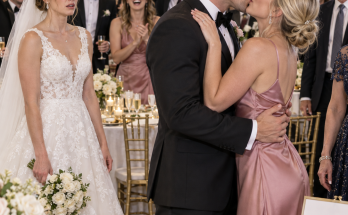
“Because I’m her father,” Gideon said calmly.
Rowan’s mouth opened.
Nothing came out.
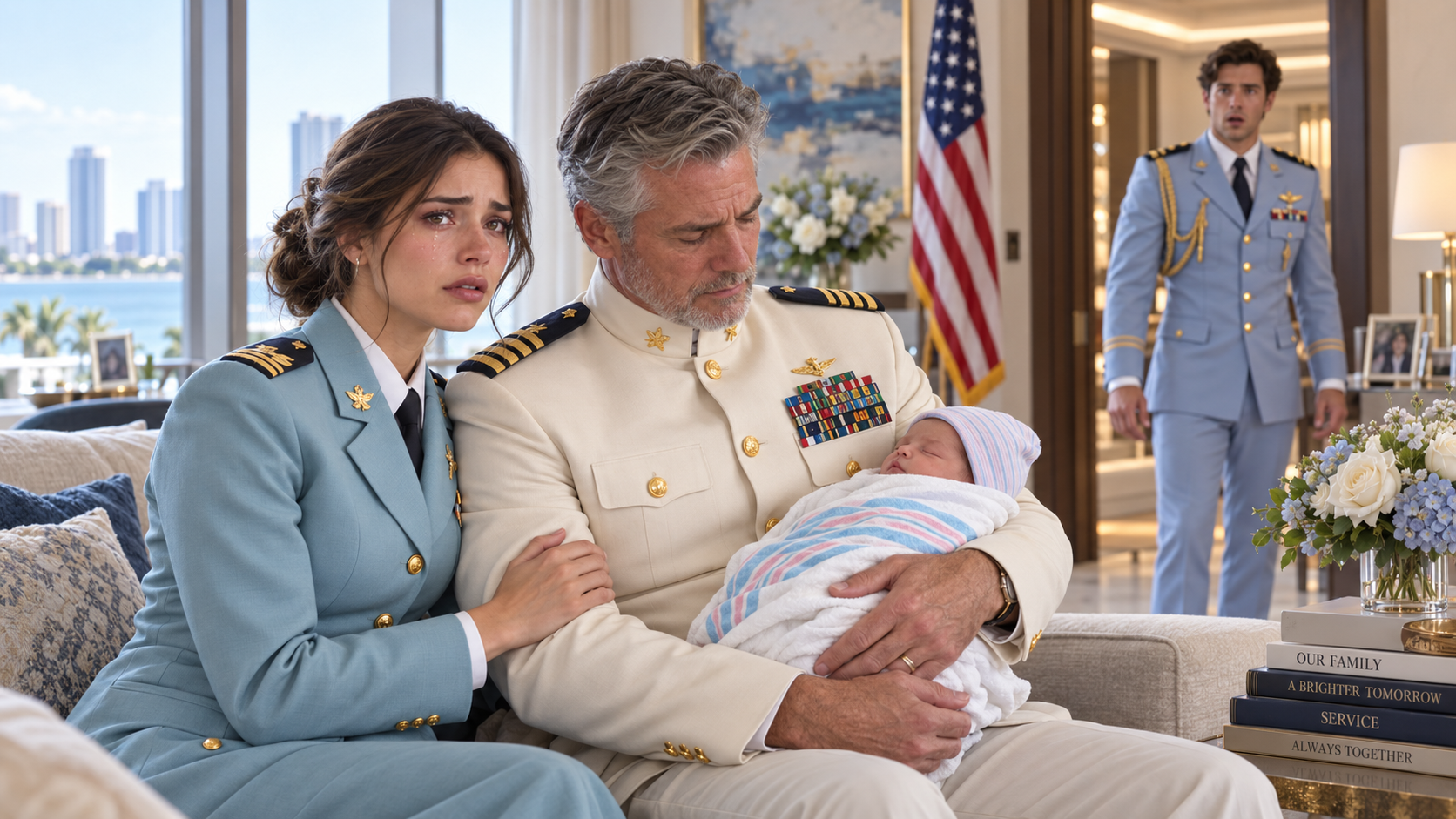
His eyes moved from my father to me, then to the tiny bundle sleeping peacefully in Gideon Sterling’s arms.
“Your father?” he finally whispered.
I folded my arms across my chest.
“The retired salesman you and your mother laughed about for two years.”
Rowan blinked.
For the first time since I had known him, he looked genuinely frightened.
Not angry.
Not irritated.
Frightened.
Gideon Sterling was the kind of man Rowan’s company mentioned in quarterly meetings.
His investment firm owned stakes in shipping companies, technology firms, medical suppliers, commercial real estate, and several financial institutions.
Rowan had once spent an entire dinner talking about how badly his company wanted Sterling Capital to invest in their expansion.
I had sat across from him eating pasta while he complained that Gideon Sterling was nearly impossible to reach.
He had no idea he was complaining about my father.
And now Dad was standing in our living room holding Rowan’s newborn son.
Rowan slowly shut the front door behind him.
“Phoebe, why didn’t you ever tell me?”
I almost laughed.
That was his first question.
Not how was the birth?
Not was Leo healthy?
Not are you all right?
Why didn’t you tell me your father was rich?
Dad noticed too.
His expression hardened.
I looked down at Leo.
“He’s three days old, Rowan.”
Rowan swallowed.
“I know.”
“Do you?”
“Of course I do.”
“What time was he born?”
Silence.
I waited.
Rowan’s face changed.
He glanced at his phone as though the answer might magically appear there.
I nodded slowly.
“That’s what I thought.”
“Phoebe, come on.”
“No. You come on. Tell me what time your son was born.”
“I was going to ask.”
“You had three days.”
“I told you I was coming back Monday.”
“Yes. After your mother’s birthday weekend.”
His jaw tightened.
“Mom turned sixty.”
“And your son was born once.”
Dad rose slowly from the sofa.
He crossed the room and carefully placed Leo in my arms.
Then he looked at Rowan.
“I gave my daughter privacy because she asked me to,” Dad said. “She wanted a marriage built without my name or money influencing anyone. I respected that.”
Rowan straightened.
“I love Phoebe.”
Dad’s eyes did not change.
“Then you have an unusual way of demonstrating it.”
“You don’t understand what happened.”
“I understand my daughter called you while in active labor.”
Rowan looked at me sharply.
“She called you?”
“I called him after you told me to get a cab.”
Rowan rubbed his forehead.
“I didn’t understand how serious it was.”
“My water broke.”
“I thought there would be more time.”
“The contractions were four minutes apart.”
“Phoebe, I panicked.”
“You laughed.”
That stopped him.
His hand fell.
I could still hear it.
Selina’s voice through the phone.
Women have been giving birth for thousands of years.
Then Rowan laughing.
See? Mom gets it.
Call a cab.
I had replayed it so many times during labor that the memory no longer hurt in the same sharp way.
It had become something colder.
Evidence.
Rowan stepped closer.
“I’m sorry.”
I moved backward immediately.
Dad stepped between us without saying anything.
Rowan stared at him.
“I’m talking to my wife.”
“And she moved away from you,” Dad replied.
Rowan’s face reddened.
“This is my house.”
“No,” I said.
He turned toward me.
“What?”
“This is our house. And considering what I discovered yesterday, you probably shouldn’t start discussing ownership.”
His expression changed again.
That was when his phone buzzed.
Then mine did.
Then Dad’s.
Rowan glanced down.
His entire body went still.
Three missed calls from his employer.
One message from his chief financial officer.
Another from the company’s legal department.
He looked up at me.
“What did you do?”
I adjusted Leo gently against my chest.
“I stopped protecting you.”
Rowan stared.
“What does that mean?”
Dad crossed his arms.
“It means you should probably answer your phone.”
Rowan ignored him.
“Phoebe.”
I walked toward the dining table.
A thick folder sat there.
I had spent most of the previous night feeding Leo, resting when I could, and going through eighteen months of statements.
Forensic accounting had taught me something important.
People rarely hide money as cleverly as they believe.
They hide it emotionally.
They depend on trust.
They assume nobody they love will look closely.
For two years, I had been that trusting person.
When Rowan told me certain charges were work expenses, I believed him.
When he said he had loaned his mother money, I didn’t ask questions.
When several thousand dollars disappeared from our emergency account, he told me it had been moved temporarily into an investment vehicle.
I accepted it.
Because he was my husband.
Then I gave birth without him.
And sometime around three in the morning the next day, while Leo slept in the hospital bassinet, I opened our accounts.
Really opened them.
What I found changed everything.
I placed the folder on the table.
“Sit down.”
Rowan didn’t move.
“What is that?”
“Sit.”
Something in my voice must have convinced him.
He pulled out a chair.
Dad remained standing near the window.
I opened the folder.
“Over the past fourteen months, sixty-eight thousand dollars left our joint savings account.”
Rowan looked annoyed.
“We discussed those investments.”
“No, you told me they were investments.”
“They were.”
“Then show me the account.”
He hesitated.
“That’s what I thought.”
I turned the first page toward him.
“Twenty-three thousand went to Selina.”
“That was repayment.”
“For what?”
“She helped me years ago.”
“There is no loan agreement.”
“Family doesn’t need paperwork.”
“You told me you borrowed eight thousand.”
Rowan said nothing.
I turned another page.
“Fourteen thousand went to a company called Northwood Consulting.”
“That’s work-related.”
“Northwood Consulting was registered eleven months ago.”
“So?”
“To your mother.”
His face drained.
Dad’s gaze sharpened.
I continued.
“Northwood has no employees. No website. No office. Its mailing address is a box at a shipping store twelve minutes from Selina’s house.”
Rowan pushed back from the table.
“You had no right digging through her business.”
“I didn’t have to. Public registrations exist for a reason.”
“She does consulting.”
“For your company?”
Rowan froze.
I tapped the next document.
“Because Northwood received forty-one thousand dollars from your employer.”
“That isn’t my problem.”
“You approved the invoices.”
His face turned red.
“You don’t understand my job.”
“I understand invoices.”
“Phoebe.”
“I understand approval thresholds too.”
Dad leaned slightly against the window frame.
He hadn’t interrupted once.
He knew I did not need rescuing from numbers.
That was my battlefield.
I slid another paper forward.
“You approved each invoice below the amount requiring secondary review.”
Rowan’s breathing changed.
“They were legitimate expenses.”
“What service did Northwood provide?”
“Administrative work.”
“What administrative work?”
“Various things.”
“Name one.”
He looked at me.
I waited.
Nothing.
I nodded.
“That’s what I thought.”
Rowan stood abruptly.
“This is ridiculous.”
“Sit down.”
“You’re accusing me of stealing from my company because I missed one hospital visit.”
“One hospital visit?”
His words cracked something open inside me.
I stared at him.
“I was giving birth to your child.”
“That’s not what I meant.”
“Yes, it is.”
“No.”
“You still think the problem is that you missed an appointment.”
“I know I messed up.”
“You abandoned me during labor.”
“Stop using that word.”
“Why?”
“Because I didn’t abandon you.”
“You left me alone.”
“You were at a hospital!”
The room went silent.
Leo stirred against my chest.
I instinctively rocked him.
Rowan immediately lowered his voice, but the damage was done.
Dad’s expression became glacial.
I whispered, “I was at a hospital.”
“Yes.”
“With strangers.”
“You had doctors.”
“I needed my husband.”
“I couldn’t magically be in two places.”
“You were at a restaurant fifteen minutes away.”
Rowan looked down.
That detail mattered.
He had not been hours away.
He had not been trapped on an airplane.
He had not been handling an emergency.
He was fifteen minutes away eating steak and drinking champagne.
I had checked the restaurant address while I was in labor.
I had needed to know.
Some foolish part of me had wanted the distance to make his choice more understandable.
It didn’t.
I turned another page.
“Then there’s the company card.”
Rowan’s eyes snapped toward me.
He knew exactly what I meant.
Dad unfolded his arms.
“What company card?”
I answered without looking at him.
“The one Rowan told me had been cancelled six months ago.”
“It was.”
“No.”
I placed photographs of statements on the table.
“Luxury hotel. Spa appointments. Designer handbag. Jewelry. Restaurant charges.”
Rowan reached for the papers.
I moved them away.
“You went through my work account?”
“You connected the statement notifications to our shared email address when you first received the card. You forgot.”
“That doesn’t mean you can—”
“The charges aren’t yours.”
He stopped.
I looked him directly in the eyes.
“They’re Selina’s.”
His mouth tightened.
“She occasionally uses the card when she organizes company dinners.”
“Your employer pays for her handbags?”
“Obviously not.”
“Her spa visits?”
“No.”
“Her hotel?”
Rowan looked away.
I continued.
“And apparently they paid for the eighteen-thousand-dollar watch you gave her for her birthday.”
His face went white.
That watch.
The one his mother had apparently loved so much.
Mom loved the watch I bought her.
I almost admired the arrogance.
He had used company money to purchase his mother an expensive birthday gift, then bragged about it to his wife while she was recovering from childbirth alone.
Dad finally spoke.
“That’s why his employer is calling?”
“Partly.”
Rowan turned toward him.
“You contacted them?”
Dad shook his head.
“I didn’t.”
Rowan looked at me.
“I did,” I said.
His eyes widened.
“What?”
“I sent a factual notice to their internal audit department this morning.”
“You reported me?”
“I reported irregular charges.”
“You’re my wife.”
“I’m also a licensed forensic accountant.”
“You don’t even work for my company!”
“No. Which is why I sent the evidence instead of conducting an investigation myself.”
He stared at me as if I were someone he had never met.
Perhaps I was.
Or perhaps he had simply never bothered to know me.
“You’re trying to destroy me.”
“No.”
“Then what do you call this?”
“Consequences.”
He laughed once.
There was no humor in it.
“Because I went to my mother’s birthday?”
“Because you stole money.”
“I didn’t steal anything!”
“Then answer their calls.”
His phone buzzed again.
He ignored it.
Dad looked toward the screen.
“You may want to take that.”
“This is none of your business.”
Dad’s eyes narrowed.
“My daughter came out of fourteen hours of labor believing her husband did not care whether she was frightened or alone. That makes her well-being my business.”
“You don’t know our marriage.”
“I know enough.”
Rowan paced toward the kitchen.
He ran both hands through his hair.
“I made mistakes.”
I almost smiled at the plural.
Finally.
Progress.
“But this is insane,” he continued. “You’re acting like I’m some criminal.”
“I don’t know what you are yet.”
“You know me.”
“I thought I did.”
He looked toward Leo.
Something softened briefly in his face.
“Can I hold him?”
Every instinct in me tightened.
Not because I believed Rowan would hurt him.
I didn’t.
But because he had not asked once in three days.
And now that his world was collapsing, suddenly he remembered he was a father.
Still, Leo was his son.
I would not use my child as punishment.
I looked at Dad.
He understood immediately and stepped back.
I approached Rowan slowly.
“Support his head.”
His expression flickered with irritation.
“I know how to hold a baby.”
“No, you don’t.”
He stopped.
“You missed every parenting class after the first one.”
“I had work.”
“You also skipped the hospital tour.”
“Phoebe.”
“Support his head.”
This time he nodded.
I carefully placed Leo into his arms.
Rowan looked down.
And everything changed for exactly ten seconds.
His face softened.
His shoulders dropped.
Leo yawned.
Rowan stared as if he had never seen anything so small.
“Oh,” he whispered.
One word.
That was all.
Then Leo wrapped his tiny fingers around Rowan’s index finger.
Rowan’s eyes filled.
I looked away.
Because once, not long ago, that moment would have healed anything in me.
I had dreamed about it.
Rowan holding our son.
Me beside him.
Our family beginning.
But some moments arrive too late.
Not because they are meaningless.
Because they can no longer erase what came before.
Rowan swallowed hard.
“He looks like you.”
“Dad says he has your chin.”
A fragile smile appeared.
“Really?”
“Yes.”
For one second, I saw the man I married.
The man who used to make coffee before I woke up.
The man who drove across town in the rain because I had once mentioned craving cinnamon rolls.
The man who cried when the pregnancy test turned positive.
That man had existed.
Which made everything worse.
People often imagine terrible marriages are terrible from the beginning.
Mine wasn’t.
It became terrible slowly.
One compromise at a time.
One excuse at a time.
One moment when Rowan chose Selina over me and I told myself it was easier not to fight.
When we got engaged, Selina insisted on choosing the venue.
I let her.
When we bought our house, she demanded a key.
I gave in.
When I became pregnant, she announced the pregnancy online before I had even told several close friends.
Rowan called me dramatic for being upset.
When she criticized the name Leo, Rowan suggested we reconsider it.
When she decided she should be in the delivery room, I said no.
That argument lasted six weeks.
Then came her birthday.
Her final test.
And Rowan failed so completely that there was nothing left for me to rationalize.
His phone rang again.
This time he answered.
“Hello?”
I watched his face.
“Yes.”
Silence.
“No, I can explain.”
More silence.
“I’m at home.”
His eyes flicked toward me.
“No, I understand.”
Another pause.
His shoulders sagged.
“When?”
Then:
“I’ll be there.”
He ended the call.
Dad asked, “Suspended?”
Rowan’s head snapped toward him.
“How did you know?”
Dad shrugged.
“Standard procedure when there are credible internal-control concerns.”
Rowan laughed bitterly.
“Of course you know.”
He handed Leo back to me.
“They want me at the office tomorrow morning.”
“That seems reasonable.”
“They’ve frozen my company accounts.”
“Also reasonable.”
“They told me not to contact anyone involved with Northwood Consulting.”
I raised an eyebrow.
“So don’t.”
“That includes my mother.”
For the first time that afternoon, I nearly laughed.
Rowan noticed.
“You think this is funny?”
“No.”
But there was something painfully ironic about it.
His mother’s birthday had mattered more than his son’s birth.
Now the company card he used to fund that birthday might cost him his career.
Rowan picked up his suitcase.
“I need a shower.”
“No.”
He looked at me.
“What?”
“You’re not staying here.”
His hand tightened around the suitcase handle.
“Excuse me?”
“I packed the rest of your things.”
“What are you talking about?”
I pointed toward the hallway.
Two boxes sat beside the coat closet.
Rowan stared at them.
“You’re kicking me out?”
“Yes.”
“This is my home too.”
“And I’m not changing the locks or denying you access illegally. But I’m asking you to leave voluntarily tonight.”
“And if I don’t?”
Dad stepped forward.
I raised one hand.
“No, Dad.”
He stopped.
This was mine.
I looked at Rowan.
“If you refuse, you can sleep in the guest room, and tomorrow my attorney will file the appropriate temporary motions.”
Rowan’s expression collapsed.
“Attorney?”
“Yes.”
“You called a divorce lawyer?”
“Yesterday.”
“You just had a baby!”
“Exactly.”
“Phoebe, you’re emotional.”
That sentence almost finished him faster than anything else could have.
I stared at him.
“Do not.”
He realized immediately.
“That came out wrong.”
“No. It came out honestly.”
“I meant you’ve been through a lot.”
“And therefore I’m incapable of making decisions?”
“No.”
“Because I’m postpartum?”
“That’s not what I said.”
“You called me emotional because I’m no longer accepting behavior I tolerated before.”
“I’m saying maybe we shouldn’t make permanent decisions after one bad weekend.”
One bad weekend.
I looked down at Leo.
“Your son was born during that weekend.”
Rowan closed his eyes.
“Please.”
The word surprised me.
He almost never said please anymore.
“Give me a chance.”
I shook my head.
“I gave you one while I was standing in the maternity entrance with amniotic fluid running down my legs.”
He flinched.
“I called twice.”
“I know.”
“I begged you.”
His face crumpled slightly.
“I know.”
“You laughed.”
He whispered, “I know.”
“No, Rowan. You know now because there are consequences. You didn’t know then because you didn’t want to.”
He sat down.
For several seconds, nobody spoke.
Finally Dad said quietly, “I’ll be upstairs.”
He kissed my forehead, then Leo’s, and left us alone.
Rowan watched him disappear.
“He’s staying here?”
“For now.”
“You hate having people stay over.”
“I wanted help.”
“I could help.”
I stared at him.
“You had three days.”
He nodded slowly.
Then his expression changed.
“My mother doesn’t know.”
“Know what?”
“About your father.”
“No.”
“She’s going to lose her mind.”
“That’s not my problem.”
“You don’t understand. She’ll think—”
“I am done caring what Selina thinks.”
He looked down at his hands.
“I don’t know when I started doing that.”
“Doing what?”
“Choosing her.”
The answer was so unexpectedly self-aware that I didn’t respond immediately.
Rowan rubbed his face.
“My dad left when I was nine. Mom worked two jobs. She made everything about us surviving together. If I said no to her, she acted like I was abandoning her too.”
I had heard pieces of this before.
Never so plainly.
“That explains it,” I said.
He looked hopeful.
“It doesn’t excuse it.”
The hope disappeared.
“I know.”
“Do you?”
“I think I’m starting to.”
I shifted Leo to my other arm.
“You need therapy.”
Rowan nodded.
“I probably do.”
“You needed it before you became a husband.”
He winced.
“I probably did.”
I almost hated him for sounding reasonable now.
Where had this version been when I needed him?
Why did accountability have to arrive only after devastation?
He stood.
“I’ll go.”
I nodded.
“But I want to see Leo.”
“We’ll arrange visits.”
“I’m his father.”
“I know.”
“I don’t want some lawyer deciding when I can hold my son.”
“Then behave like someone a judge can trust.”
His eyes met mine.
“That’s harsh.”
“It’s accurate.”
He looked at Leo again.
“Can I kiss him?”
I nodded.
Rowan stepped close and kissed the top of Leo’s head.
Then, unexpectedly, he kissed my forehead too.
I pulled back.
He immediately stepped away.
“Sorry.”
I said nothing.
He picked up the boxes and suitcase.
At the front door he stopped.
“Phoebe?”
“Yes?”
“I really am sorry.”
I looked at him.
“Be sorry enough to change.”
Then he left.
The moment the door closed, my knees weakened.
Dad came downstairs almost immediately.
He had probably been listening for the door.
“I’m all right,” I said.
He looked at me.
“No, you’re not.”
And because he was my father, I stopped pretending.
I cried.
Not delicately.
Not quietly.
I cried for the marriage I thought I had.
For the delivery I had imagined.
For the husband who had become someone I no longer recognized.
For my own embarrassment at having tolerated so much.
Dad sat beside me and held Leo while I buried my face against his shoulder.
“I should have told you sooner,” I whispered.
Dad shook his head.
“No.”
“I disappeared from your life because I wanted to prove I could do everything without you.”
“You wanted independence.”
“I was stubborn.”
“You inherited that from me.”
Despite everything, I laughed.
Dad smiled faintly.
Then his expression softened.
“I’m sorry I made my success feel like something you had to escape.”
That surprised me.
“You didn’t.”
“Yes, I did.”
I looked at him.
After Mom died, Dad had thrown himself into work.
He loved me.
I had always known that.
But love and presence were not the same thing.
By sixteen, I had chauffeurs, tutors, security, private schools, and almost no father at dinner.
At twenty-one, I legally adopted Mom’s surname, Mercer, professionally.
Dad had been hurt.
I had been angry.
Then distance became easier than reconciliation.
Leo changed that.
He had only existed three days and had already forced three generations of our family to stop lying to themselves.
Dad looked down at him.
“I missed enough of your life.”
His voice broke.
“I don’t want to miss his.”
I reached for his hand.
“You won’t.”
The next morning Rowan went to work.
He was escorted into a conference room at nine.
By eleven, he was formally suspended pending investigation.
At one fifteen, Selina called me.
I stared at the screen.
Dad was making soup in the kitchen.
He looked toward the phone.
“You don’t have to answer.”
“I know.”
I answered.
“Hello?”
Selina didn’t bother with a greeting.
“What have you done?”
I leaned back against the sofa.
“Good afternoon, Selina.”
“Do not play games with me.”
“What do you want?”
“Rowan has been suspended.”
“I heard.”
“They are accusing him of financial misconduct.”
“Yes.”
“Because of you.”
“No. Because of financial misconduct.”
Her voice sharpened.
“You spiteful little woman.”
Dad slowly turned from the stove.
I raised a finger, telling him not to interfere.
Selina continued.
“Rowan misses the birth of one baby and you try to destroy his career?”
“One baby?”
“You know what I mean.”
“I know exactly what you mean.”
“You have always been desperate to compete with me.”
I almost admired the scale of her delusion.
“Selina, I have never wanted your position.”
“You resent how close my son and I are.”
“No. I resent being married to a man who treats his mother like his spouse and his spouse like an inconvenience.”
She gasped.
“How dare you?”
“Quite easily now.”
“You think because you gave birth you suddenly control everything?”
“No.”
I looked toward Dad.
“But I did discover something during my hospital stay.”
Silence.
I continued.
“Northwood Consulting.”
The silence changed.
It became heavy.
“Never heard of it,” she said.
Too quickly.
I smiled.
“Interesting.”
“What?”
“You registered it.”
Another pause.
“I have several businesses.”
“Yes.”
“I’m an entrepreneur.”
“What services did Northwood provide to Rowan’s employer?”
“That is confidential.”
“Great. Tell their investigators.”
“What?”
“They’ll probably contact you.”
Her breathing became louder.
“What did you send them?”
“Documents.”
“You had no right.”
“I sent records from accounts legally accessible to me, along with public corporate registrations and copies of invoices Rowan stored on our shared computer.”
“You invaded his privacy.”
“Call a lawyer.”
“Phoebe.”
“Yes?”
Her tone changed.
Suddenly sweet.
That frightened me more than the anger.
“We’re family.”
“No.”
“Of course we are.”
“You told your son to leave me alone while I was in labor.”
“I was joking.”
“You told him women had been giving birth for thousands of years.”
“Well, they have.”
“And that was why you believed he should stay at your dinner?”
“He had spent months organizing it.”
“I spent nine months growing his son.”
“That’s vulgar.”
I laughed.
For the first time in years, Selina had no power over me.
“I’m hanging up now.”
“Wait.”
“What?”
“Who is that man?”
I froze.
“What man?”
“The one Rowan says is staying with you.”
Of course.
Rowan had told her.
I looked toward Dad.
He raised an eyebrow.
“Ask Rowan,” I said.
“He won’t tell me.”
“That sounds like a family matter.”
“Phoebe!”
I hung up.
Dad laughed.
Actually laughed.
It was the first time I had heard that sound from him in years.
Two hours later, Selina learned the truth.
I knew because she called seventeen times.
Then she sent a message.
PHOEBE, PLEASE CALL ME. I THINK THERE HAS BEEN A TERRIBLE MISUNDERSTANDING.
I showed Dad.
He read it.
Then looked at me.
“Remarkable recovery.”
I laughed so hard my incision hurt.
Three days later, Selina appeared at my door carrying flowers.
Of course she did.
They were enormous.
White roses.
A peace offering designed by someone who believed money could disguise character.
I opened the door but left the security chain attached.
Selina smiled nervously.
“Phoebe.”
“Selina.”
“You look wonderful.”
“I gave birth six days ago.”
“You’re glowing.”
“No, I’m sleep deprived.”
Her smile faltered.
“I brought flowers.”
“I’m allergic to lilies.”
She looked down.
There were lilies mixed among the roses.
“Oh.”
After four years of knowing me, she had forgotten.
Or never cared enough to remember.
“What do you want?”
Her shoulders dropped.
“I want to apologize.”
“For what?”
She blinked.
“Well… everything.”
“Name it.”
Her lips tightened.
“Phoebe.”
“If you’re sorry, name what you’re sorry for.”
She looked toward the street.
“I’m sorry the birthday dinner conflicted with Leo’s arrival.”
“No.”
“What?”
“That makes it sound like a scheduling accident.”
Her expression hardened slightly.
“I’m sorry Rowan wasn’t present.”
“Why wasn’t he present?”
She knew exactly what I was doing.
“I encouraged him to stay.”
“You mocked me while I was in labor.”
“I didn’t understand the seriousness.”
“I said my water broke.”
“I thought first labors take ages.”
“Mine took fourteen hours.”
“Exactly.”
“That means he had fourteen hours to arrive.”
Her face went still.
For once, Selina had no response.
I continued.
“And then neither of you called.”
“I assumed Rowan had.”
“He didn’t.”
“I’m sorry.”
I believed she was sorry.
Just not for the reason she wanted me to believe.
She was sorry because Gideon Sterling knew what she had done.
She was sorry because investigators were examining Northwood.
She was sorry because the daughter-in-law she had treated as insignificant was suddenly connected to a man whose name opened doors she wanted access to.
“Are you sorry you used Rowan’s company card?”
Her eyes flashed.
“That is between Rowan and me.”
“No. Apparently it’s between Rowan, you, and his employer.”
She lowered her voice.
“May I come inside?”
“No.”
“I would like to meet my grandson.”
“You will, eventually.”
“I’m his grandmother.”
“And I am his mother.”
The words stopped her.
For years she had used titles like weapons.
I was finally learning how boundaries worked.
She looked over my shoulder.
“Is Mr. Sterling here?”
I nearly smiled.
There it was.
Not Gideon.
Not your father.
Mr. Sterling.
“Yes.”
“I would appreciate speaking to him.”
“He has no interest in speaking with you.”
Selina’s cheeks reddened.
“Phoebe, please.”
“No.”
“I think we got off on the wrong foot.”
“We’ve known each other for four years.”
She stared at me.
Then the mask slipped.
“You think you’re better than me now.”
“No.”
“You hid your family’s wealth.”
“Yes.”
“You let us think your father was nobody.”
“I told you my father worked in finance.”
“You said he was semi-retired!”
“He is.”
“You let me embarrass myself.”
I actually smiled.
“Selina, if treating someone decently depends on knowing whether their father is a billionaire, the embarrassment belongs entirely to you.”
Her face went bright red.
I closed the door.
The investigation lasted seven weeks.
During that time, Rowan lived in a furnished apartment near his office.
He started therapy.
To my surprise, he did not fight my request for temporary primary custody.
He visited Leo three evenings a week and Saturday afternoons.
At first, Dad or I stayed in the room.
Then gradually, as Rowan learned feeding schedules, diaper changes, safe sleep practices, and the strange art of calming a screaming infant at two in the afternoon for no obvious reason, I trusted him alone for short periods.
Something changed in him.
Maybe fatherhood.
Maybe humiliation.
Maybe therapy.
Maybe all three.
He stopped arguing.
He stopped blaming me.
He stopped calling Selina every time something went wrong.
Most importantly, he stopped asking me to forgive him.
Instead, he started behaving differently.
One evening he arrived for his visit carrying a small bag.
“What’s that?” I asked.
“Diapers.”
“We have diapers.”
“I know.”
He looked embarrassed.
“I realized I kept showing up to parent using everything you already bought.”
It was such a small thing.
But it mattered.
Another evening, Leo was screaming.
I had been awake almost the entire previous night.
Rowan took one look at me and said, “Go sleep.”
“I’m fine.”
“You’re swaying while standing still.”
“I do that now.”
“Phoebe.”
I looked at him.
“I can handle him.”
Months earlier, I would have heard that as criticism.
Now it sounded like an offer.
I handed Leo over.
I slept three uninterrupted hours.
When I woke, Rowan was still there.
Leo was asleep on his chest while Rowan sat rigidly on the couch, afraid to move.
He whispered, “My arm is completely numb.”
I laughed.
“Welcome to parenthood.”
He smiled.
Then the smile faded.
“I should have been there.”
I knew what he meant.
The hospital.
“You should have.”
“I think about it every day.”
“That’s yours to carry.”
He nodded.
“I know.”
That was the difference.
Old Rowan would have asked me to make him feel better.
New Rowan understood remorse was not my responsibility.
The company investigation eventually found that Rowan had approved fraudulent invoices totaling eighty-seven thousand dollars over eighteen months.
Northwood had provided no meaningful services.
Selina had received most of the money.
The company card had been used for another thirty-two thousand dollars in personal purchases.
Rowan admitted everything.
According to his attorney, his cooperation mattered.
So did repayment.
Dad offered to pay nothing.
I loved him for that.
When Rowan quietly asked whether I could loan him the amount needed to avoid selling his car and investment account, I said no.
Not angrily.
Simply no.
He sold the car.
He liquidated investments.
Selina was forced to return jewelry, cancel a luxury cruise, and refinance her house.
The company terminated Rowan.
They could have referred everything for more aggressive prosecution, but after restitution and cooperation, the matter concluded with a civil settlement and strict repayment terms.
Rowan lost his position, bonuses, stock options, and professional reputation.
For the first time in his adult life, Selina could not rescue him.
And for the first time in hers, he refused to rescue her.
She called me once after that.
Her voice shook.
“You ruined my son.”
I replied quietly, “No. You taught him that loving you meant never saying no.”
She began crying.
I almost softened.
Then she said, “If you had been a better wife, he wouldn’t have needed me.”
There it was.
I hung up.
After that, all communication about Leo went through Rowan.
Two months after Leo’s birth, my attorney filed the divorce petition.
Rowan signed without contesting it.
He came over that evening.
We sat on the back porch while Dad watched Leo inside.
The sun had nearly disappeared.
Rowan looked thinner.
Older.
“I signed everything.”
“I know.”
“My lawyer sent it.”
“Thank you.”
He nodded.
Silence settled between us.
Then he said, “I got a job.”
I looked at him.
“Where?”
“Small accounting software firm.”
“That’s good.”
“Half the salary.”
“Still good.”
“They know about the investigation.”
“That’s better.”
He smiled faintly.
“I told them before they ran the background check.”
I nodded.
“I’m glad.”
He looked through the window toward Leo.
“He’s getting big.”
“He’s ten pounds now.”
“Really?”
“Yes.”
Rowan laughed.
“I swear he grows between visits.”
“He does.”
Another silence.
Then Rowan looked at me.
“Was there ever a chance?”
I knew what he meant.
For us.
I considered lying.
It would have been kinder.
But kindness built on dishonesty had already caused enough damage.
“Not after the hospital.”
He looked down.
“I thought so.”
“I might have forgiven almost anything else.”
“I know.”
“You didn’t just miss Leo being born.”
“I know.”
“You showed me that when I was scared, vulnerable, and begging you, my pain could become an inconvenience if your mother wanted something.”
His eyes filled.
“I know.”
“And I can’t unknow that.”
A tear slipped down his cheek.
He wiped it quickly.
“I’m sorry.”
“I know.”
This time I meant it.
I believed him.
But forgiveness and reconciliation are not the same thing.
Sometimes someone can genuinely regret what they did.
Sometimes they can change.
Sometimes they can become better.
And you still do not owe them your return.
“I hope you keep going to therapy,” I said.
“I will.”
“For Leo.”
“For me too.”
That answer made me smile.
“Good.”
Rowan stood.
Then paused.
“Do you hate me?”
I thought about it.
“No.”
He looked surprised.
“I did for a while.”
“What changed?”
“I got tired.”
He almost laughed.
I continued.
“Hating you meant carrying you around all day. I have a baby. He’s heavy enough.”
That time Rowan really laughed.
So did I.
For one strange moment, we sounded like ourselves again.
Then he left.
The divorce became final seven months after Leo’s birth.
There was no dramatic courtroom battle.
No screaming.
No last-minute reconciliation.
We agreed to shared legal custody, with Leo living primarily with me while Rowan gradually increased parenting time.
Selina received supervised visits initially.
She hated that.
But Rowan backed me.
That shocked everyone.
Especially her.
One afternoon, she screamed at him in our driveway that I was turning him against his own mother.
Rowan looked at her and said something I never thought I would hear.
“No, Mom. Phoebe stopped me from becoming the kind of parent you taught me to be.”
Selina went silent.
So did I.
Rowan continued.
“Leo will never grow up believing love means obedience.”
He walked inside.
Selina stood there for another minute.
Then she left.
She did not speak to him for three months.
Rowan survived.
That was important.
He learned that his mother’s silence was not fatal.
Her disappointment was not fatal.
Her anger was not fatal.
A boundary did not mean abandonment.
Eventually, they resumed limited contact.
This time on different terms.
Dad, meanwhile, became exactly the grandfather I never expected.
Gideon Sterling, billionaire investor, terrifying negotiator, and man who once made three CEOs resign during a single board meeting, became completely helpless around Leo.
He bought ridiculous things.
A miniature cashmere coat Leo outgrew in six weeks.
A handcrafted wooden crib that cost more than my first car.
A silver rattle so impractical I refused to let Leo touch it.
“Dad.”
“It’s traditional.”
“It’s a choking hazard.”
“It was made in Switzerland.”
“Babies can choke internationally.”
He stared at me.
Then laughed.
I put the rattle in a display cabinet.
Dad also tried to establish a college trust large enough to fund Leo through six doctoral degrees.
I made him reduce it.
We fought.
Then compromised.
For us, that counted as emotional growth.
More importantly, Dad showed up.
Not with money.
With time.
He changed diapers.
Badly.
He learned how to warm bottles.
Slowly.
He walked Leo around the garden when he refused to nap.
He attended pediatric appointments whenever I asked.
He sat on my kitchen floor at three in the morning one night while I cried because Leo had a fever and I was convinced something was terribly wrong.
The fever was mild.
Leo was fine.
Dad stayed anyway.
One morning, when Leo was almost ten months old, I found Dad asleep on the nursery rug with one hand through the crib bars.
Leo was sleeping with his tiny fingers wrapped around Dad’s thumb.
I took a picture.
Dad later claimed I was forbidden from showing anyone.
I framed it.
It sits on my desk.
I eventually returned to work.
Not because I needed money.
Because I loved what I did.
Forensic accounting made sense to me in ways people sometimes didn’t.
Numbers had stories.
Transactions had motives.
Patterns had consequences.
I started my own practice rather than joining another firm.
Dad offered funding.
I refused.
He offered again.
I refused again.
Then he asked whether he could become my first client instead.
That I accepted.
Sterling Capital hired my firm to conduct an independent review of several subsidiaries.
Within a year, I had twelve employees.
Within two, thirty-one.
For the first time, I stopped defining independence as refusing everything connected to my father.
I learned that accepting love was not the same as surrendering autonomy.
Rowan rebuilt too.
More slowly.
He never returned to the executive world he once worshipped.
Instead, he became operations director at the small software firm.
The salary was lower.
The title impressed fewer people.
He was happier.
At least, he seemed that way.
He stopped buying luxury watches.
He drove a used SUV filled with baby wipes, crushed crackers, and toys.
He learned every verse of Leo’s favorite songs.
He kept spare pajamas at his apartment.
He never missed a pediatric appointment again.
And whenever Leo was sick, Rowan arrived before I finished texting him.
Not because that erased what happened.
Nothing could.
But because people are more than their worst decisions if they genuinely choose to become better afterward.
When Leo turned three, we held his birthday party in Dad’s garden.
Nothing extravagant.
At my insistence.
Balloons.
Cupcakes.
A small inflatable castle.
Several children from daycare.
Dad tried to hire a live orchestra.
I threatened to cancel the party.
He settled for a magician.
Rowan arrived carrying a wrapped box.
Leo ran toward him.
“Daddy!”
Rowan dropped to his knees.
Leo crashed into his arms.
I watched from across the lawn.
There was a time when that sight would have hurt.
Now it didn’t.
It made me happy.
Because Leo deserved a father who showed up.
Even if that father had learned too late how important showing up was.
Selina came too.
She had changed somewhat.
Not entirely.
People rarely transform into completely different human beings.
She still liked giving advice nobody requested.
She still believed expensive gifts communicated affection.
She still occasionally tested boundaries.
But now, when I said no, she stopped.
Mostly because Rowan enforced it.
She approached me near the cake table.
“You look well.”
“So do you.”
She nodded toward Leo.
“He’s beautiful.”
“Yes.”
“He looks like Rowan at that age.”
“You’ve mentioned that.”
She smiled slightly.
“I probably have.”
For a moment we stood quietly.
Then she said, “I was cruel to you.”
I looked at her.
She had apologized before.
Sort of.
Never like that.
“I know.”
“I thought keeping Rowan close meant making sure no woman became more important.”
“That sounds exhausting.”
“It was.”
I believed her.
She looked toward her son.
“He barely spoke to me for months.”
“I know.”
“I blamed you.”
“I know that too.”
“I was wrong.”
I waited.
She looked down.
“I almost cost myself my son.”
Then she looked at Leo.
“And my grandson.”
My anger toward her had faded over the years.
But trust had not returned.
Perhaps it never would.
Still, I appreciated truth when I heard it.
“Thank you for saying that.”
She nodded.
Then, because she was still Selina, she added, “I do think the cake could have used more frosting.”
I stared at her.
She smiled.
I laughed.
So did she.
Some relationships do not heal into closeness.
Sometimes healing simply means the war ends.
That was enough for me.
Later that afternoon, Leo opened Rowan’s gift.
Inside was a wooden train set.
Not expensive.
Not impressive.
But when Rowan assembled it on the lawn, Leo squealed so loudly that every adult turned.
Dad crouched down beside them.
Soon Gideon Sterling and Rowan were arguing about whether a bridge piece had been installed backward.
I stood beneath the shade of an old maple tree watching three generations of men kneeling in the grass around a toy train.
My chest tightened.
Not with sadness.
With gratitude.
Life had not become what I imagined when I married Rowan.
It became something else.
Something messier.
Stranger.
More honest.
That evening, after everyone left, Leo fell asleep against my shoulder.
Dad helped me carry gifts inside.
“You happy?” he asked.
I looked around the kitchen.
Balloons drifted near the ceiling.
Crumbs covered the counter.
A tiny blue sock sat inexplicably beside the sink.
“Yes.”
Dad smiled.
“Good.”
I looked at him.
“Are you?”
He pretended to think.
“My grandson believes I’m better at building trains than his father.”
“He’s three. His judgment is questionable.”
Dad laughed.
Then he kissed my forehead.
“I’m happy.”
Later, after I put Leo to bed, I stood outside his room.
Three years earlier, I had stood in a hospital hallway convinced my life was collapsing.
In some ways, it was.
The marriage I believed would last forever ended.
The man I trusted disappointed me in the moment I needed him most.
Secrets came out.
Money disappeared.
Careers collapsed.
Relationships broke.
But destruction is not always the end of a story.
Sometimes it clears away what should never have been standing.
I found my father again.
I found my voice.
Rowan found the courage to become independent from the woman whose approval had controlled him all his life.
Selina learned that love could not survive indefinitely without respect.
And Leo gained something more valuable than the illusion of a perfect family.
He gained adults willing to change for him.
A few weeks after his third birthday, I found the screenshot again.
Mom loved the watch I bought her. Coming home Monday. Don’t start another fight.
For years I had kept it in a private folder with the divorce documents.
Evidence.
That was how I had thought about it.
Evidence of the moment my marriage ended.
I stared at it for a long time.
Then I deleted it.
Not because it had stopped mattering.
Not because I forgave what happened.
Not because I wanted to pretend the pain had never existed.
I deleted it because I no longer needed proof.
I remembered who I had been that night.
A frightened woman in labor begging her husband to come.
But I also knew who I had become afterward.
A mother who refused to teach her son that love meant accepting neglect.
A daughter who learned pride could isolate just as effectively as cruelty.
A professional who trusted facts.
A woman who stopped confusing endurance with devotion.
The next morning Rowan arrived early to pick Leo up.
Leo ran down the hallway wearing dinosaur pajamas.
“Daddy!”
Rowan laughed and scooped him up.
“You ready for pancakes?”
“With chocolate!”
“Your mother said blueberries.”
Leo looked at me.
I raised an eyebrow.
He whispered dramatically to Rowan, “Chocolate blueberries.”
Rowan nodded gravely.
“A loophole.”
“Do not teach him that word,” I said.
Rowan smiled.
“No promises.”
He carried Leo toward the door.
Then he paused.
“Phoebe?”
“Yes?”
“I’m taking him to the park after breakfast.”
“Okay.”
“You want coffee when I bring him back?”
I studied him.
There was no hidden meaning in the question.
No attempt to revive our marriage.
Just kindness.
“Sure.”
“What kind?”
“The same thing I always order.”
He winced.
“That complicated oat-milk thing?”
“You remember.”
“I remember a lot.”
For a second our eyes met.
There were years between us.
Good ones.
Bad ones.
A child.
A marriage.
A divorce.
Forgiveness.
Not reconciliation.
Something different.
Something mature enough to exist without pretending the past had changed.
“See you at four,” I said.
“Four.”
He left.
Dad came down the stairs ten seconds later.
“You could date again, you know.”
I groaned.
“No.”
“I’m only mentioning it.”
“You mention it every month.”
“I know several respectable men.”
“That sentence alone terrifies me.”
“They’re successful.”
“So was Rowan.”
Dad went silent.
I smiled.
“Exactly.”
He poured coffee.
“I just want you happy.”
“I am happy.”
“With someone.”
I looked at him.
“Dad.”
He raised both hands.
“I’m done.”
He lasted six days before sending me a profile of a widowed architect.
I ignored it.
Mostly.
The architect was handsome.
But that is another story.
The important story began in a hospital lobby when the person I trusted most refused to come.
At the time, I believed abandonment was the worst thing that could happen to me.
It wasn’t.
The worst thing would have been staying exactly the same afterward.
Remaining quiet.
Remaining afraid of conflict.
Continuing to accept disrespect because leaving felt more frightening than loneliness.
I did not leave because my father was Gideon Sterling.
His money made some things easier.
I will never pretend otherwise.
But money did not make the decision.
Money did not survive fourteen hours of labor.
Money did not call Rowan and beg.
Money did not sign divorce papers.
Money did not wake at two in the morning with a crying newborn.
Money did not learn boundaries.
I did.
Three years after Leo’s birth, the hospital sent me a routine patient-experience survey connected to a records update.
One question asked whether I had adequate emotional support during childbirth.
I stared at it.
Then I smiled.
Yes.
Not from the person I expected.
But yes.
Dad had held my hand through every contraction.
He had pressed cold towels against my forehead.
He had let me nearly crush his fingers without complaint.
When Leo took his first breath, Dad cried harder than I did.
And when I whispered that Rowan should have been there, Dad did not tell me to stop loving him.
He simply said, “Yes. He should have.”
Sometimes love is not defending someone from reality.
Sometimes love is sitting beside them while reality hurts.
That is what my father gave me.
That is what I now try to give Leo.
And in a strange way, even Rowan eventually learned it too.
On Leo’s fourth birthday, he asked why Mommy and Daddy lived in different houses.
Rowan and I had prepared for that question.
Still, hearing it hurt.
I sat beside Leo on the couch.
“Because sometimes grown-ups are happier being a family in two houses.”
He frowned.
“But Daddy loves you.”
I looked at Rowan.
He looked back.
“Yes,” Rowan said softly. “I do love your mom.”
Leo seemed satisfied.
“And Mommy loves you?”
Rowan smiled sadly.
I answered carefully.
“I care about Daddy very much.”
Leo thought about that.
Then he asked the truly important question.
“Can I have cake in both houses?”
Rowan laughed.
“Yes.”
I sighed.
“Apparently divorce has benefits.”
Leo cheered.
And just like that, the moment passed.
Children sometimes understand what adults spend years complicating.
A family does not have to look perfect to contain love.
A marriage can end without turning every memory into poison.
An apology can be sincere without restoring trust.
A person can change without being owed another chance.
A grandmother can learn boundaries.
A billionaire can learn to change diapers.
A forensic accountant can miss obvious emotional fraud inside her own marriage.
And a newborn can enter the world surrounded by chaos and still become the reason everyone around him finally grows up.
Sometimes I wonder what would have happened if Rowan had left Selina’s dinner that night.
If he had arrived at the hospital.
If he had held my hand.
If he had watched Leo take his first breath.
Perhaps we would still be married.
Perhaps I would never have examined the accounts.
Perhaps Northwood would have continued billing his company.
Perhaps Selina would still control him.
Perhaps Dad and I would still speak only on holidays.
Perhaps our marriage would have survived another ten years while slowly becoming something neither of us recognized.
I will never know.
There are doors life closes before we can see what was behind them.
I stopped trying to open that one.
The life I have is enough.
More than enough.
Tonight, Leo is asleep upstairs.
Dad is in the guest room even though he owns three houses within an hour of mine.
He claims my coffee is better.
It isn’t.
Rowan is picking Leo up tomorrow for a weekend camping trip.
He has already texted me seven questions about sunscreen.
Selina mailed Leo a sweater two sizes too large because she remains convinced children grow faster than science suggests.
And I am sitting at the same dining table where I once laid out the financial records that ended my marriage.
The folder is gone.
The fear is gone.
The woman who begged someone to choose her is gone too.
I do not hate that woman.
I love her.
She was doing the best she knew how.
But I am grateful she learned something before Leo was old enough to imitate her.
Never beg someone repeatedly to treat you as important.
Pay attention to what people choose when choosing costs them something.
Listen when actions contradict promises.
And never confuse forgiveness with permission to repeat the same harm.
Rowan once told me to handle childbirth myself.
He meant it cruelly.
He meant that my pain belonged to me.
He was wrong about almost everything that night.
But unintentionally, he gave me one sentence that changed my life.
Handle it yourself.
So I did.
I handled the hospital.
I handled the accounts.
I handled the truth.
I handled the divorce.
I handled motherhood.
I handled rebuilding a relationship with my father.
I handled becoming someone who no longer needed a husband’s permission, a mother-in-law’s approval, or a billionaire father’s protection to know what I deserved.
And years later, when Rowan apologized one final time for missing Leo’s birth, I looked at the man he had become and finally gave him the answer neither of us had been ready for before.
“I forgive you.”
His eyes filled.
“Really?”
“Yes.”
He swallowed.
“I don’t deserve that.”
“Forgiveness isn’t a prize.”
He nodded slowly.
“Thank you.”
I smiled.
“But Rowan?”
“Yes?”
“I’m still not taking you back.”
For a second he stared at me.
Then he laughed.
“I know.”
I laughed too.
And that was when I understood I had truly healed.
Not when the divorce became final.
Not when Selina apologized.
Not when Rowan lost his job.
Not when Dad came back into my life.
Healing happened when I could remember the worst night of my marriage without wanting revenge, reconciliation, or a different past.
I could simply remember it.
Learn from it.
And continue forward.
Upstairs, Leo called from his bedroom.
“Mommy!”
I stood immediately.
“Coming!”
As I reached the stairs, Dad appeared from the kitchen holding two mugs.
“Everything okay?”
“Leo’s awake.”
Dad smiled.
“I’ll warm his milk.”
I climbed toward my son’s room.
Behind me, the house was warm and bright.
Not perfect.
Never perfect.
But peaceful.
And after everything, peace was the one thing I had stopped believing money, marriage, or anyone else could give me.
I had been wrong.
Peace could be built.
Choice by choice.
Boundary by boundary.
Truth by truth.
And sometimes, it began the exact moment someone you loved told you that you were on your own.
Because that was the moment you discovered you weren’t.
You had yourself.
And sometimes, that was where everything finally began.
💬THE END! THANK YOU FOR READING!