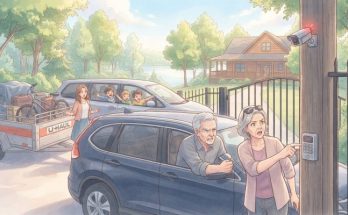
Then she turned her gaze toward me. “Someone needs to stay home and be responsible.”
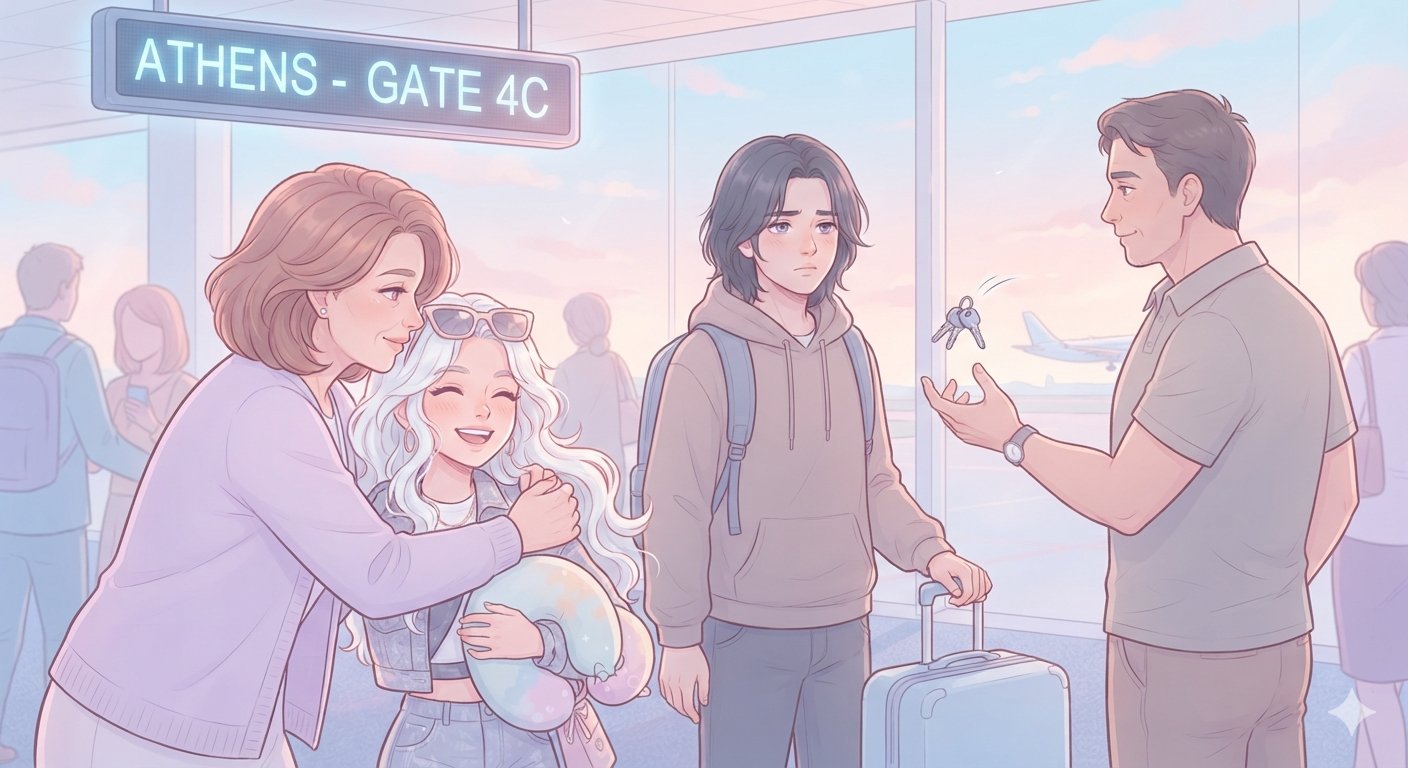
Without a word, my father flicked the house keys through the air in my direction. “Just don’t mess anything up.”
I’m nineteen, and my name is Luca.
In my family, I was always cast as the quiet one. Not because I was inherently shy, but because I learned early on that blending into the background made life easier—especially in a household where every single orbit revolved around my older sister, Bianca.
Bianca was two years older and possessed the kind of magnetic presence that immediately commandeered the room. If she achieved something mundane, my parents threw a parade. If I accomplished something difficult, they barely blinked. For years, I convinced myself I was just imagining the disparity until the pattern became impossible to ignore.
When I was accepted into three separate universities, they dismissed it, claiming college was too financially risky for rushed choices. Yet when Bianca decided she wanted a European gap year to “find herself,” they raided her college funds without hesitation. When I secured a summer job and used part of my paycheck to chip in for household bills, Mom praised me for finally learning responsibility. That same summer, Bianca flew overseas and returned to a lavish welcome-home party.
I never yelled. I never threw a tantrum. I simply kept everything bottled up. Quietly. For years.
Until the summer I finally broke the cycle.
Early in July, my parents announced that the entire family would head to the airport together the following weekend. I understood the subtext immediately: Bianca was jetting off to Greece, and I was staying behind to manage the homestead. Again. They just wanted to package it as a touching family send-off.
On the morning of the flight, we arrived at the terminal just after sunrise. I hauled a small suitcase because they told me to bring a few things “in case something came up at the house.” They didn’t treat me like a son; they treated me like unpaid household staff meant to keep the engine running while everyone else enjoyed the ride.
Walking through the terminal, I watched Mom fuss over Bianca’s sunglasses and hair. Dad carried Bianca’s heavy bag. Neither of them spare a glance for me. We finally stopped outside Gate 4C, the departure point for Athens.
Mom enveloped Bianca in an enormous embrace. “Have the best time in Greece,” she cooed. “You earned this. You’ve worked so hard.”
The word earned hit me like a physical blow. I thought of the brutal extra shifts I worked, the utility bills I organized, the home repairs I managed, and the holidays I spent entirely alone guarding the house. Apparently, none of that counted.
Then Mom turned to me. “Someone had to stay behind and be responsible.” She delivered it like a glowing compliment.
Dad tossed the keys. “Don’t mess anything up.”
I caught them, gave a nod, and watched my family disappear into the boarding line.
For several seconds, I simply stood there. Then I slid my hand deep into my hoodie pocket and pulled out my own boarding pass.
Gate 7A. First class. One way.
Three weeks earlier, the moment I realized they planned to strand me again, I started planning my own escape. I worked overtime at the repair shop, picked up weekend gigs, sold an old guitar I hadn’t touched in years, and bought my own ticket. Not to Greece—somewhere else. Somewhere they didn’t know about, somewhere that belonged entirely to me.
I told nobody—not even my best friend, Alec. I wanted this choice to be mine.
While my family boarded their flight, I crossed the terminal to Gate 7A. The attendant scanned my passport. “Welcome aboard, Mr. Reyes.”
For the first time in years, I felt like I was moving toward something instead of being left behind. My phone vibrated, no doubt reminding me to water the plants or check the mail. I ignored it.
Before leaving that morning, I had left a simple note on the dining room table beside the emergency list: Gone for a while. Maybe longer. Don’t wait up. No drama, no accusations. I just wanted them to experience my absence.
Twelve hours later, I landed, rented a car, and drove to a small hideaway overlooking turquoise water. The first night, sitting on the balcony, I realized nobody needed anything from me, nobody mentioned Bianca, and nobody demanded I fix their crises. For the first time, silence felt peaceful.
Days later, Bianca left a voicemail complaining that our parents were hounding her about home responsibilities, and Dad emailed me calling me reckless, immature, and selfish, demanding I come home to discuss things “like adults.”
Instead of apologizing like the old me would have, I bought a postcard and wrote six words on the back: This time, you figure it out. And mailed it.
When Alec sent a photo of our family home weeks later showing a large FOR SALE sign planted in the yard, I realized they were trying to sell the house—the very place containing my childhood books, documents, and memories—to regain control.
But they didn’t know what I had discovered a year prior.
During an earlier trip, I had stumbled across a hidden lockbox in the attic containing bank transfers, redirected college accounts, and paperwork regarding my late grandfather’s cabin, which I legally co-owned but had been signed away without my consent.
I had copied everything back then and kept it safe. Now, with Alec guiding me through a video call in the attic, we retrieved the lockbox and reviewed the documents. I shared them with a legal-minded friend, Sandra, who confirmed the serious legal implications of these unauthorized transfers.
We drafted a clean, professional email detailing the asset discrepancies and sent it to my parents, copying their accountant and attorney.
Panic ensued immediately. Dad emailed trying to excuse the actions as “meant for Bianca,” but he couldn’t deny the records. With financial scrutiny freezing accounts and stalling the house sale due to title issues, my family desperately needed my cooperation. The anger vanished, replaced by pleas from Mom: We made mistakes. Please come home. We miss you.
By then, however, I had built a real life. I accepted a job managing online operations for a local café owner, lived in a peaceful town, and finally felt free. I eventually changed my number, closed my socials, and left a final note with Alec: I was never trying to punish you. I was trying to become free.
Months later, a rainy afternoon brought a letter with no return address. It was from Bianca. She wrote about how experiencing exclusion and a lack of automatic exceptions had finally opened her eyes to what my childhood had been like.
“You deserved better, Luca,” she wrote. “You always did.”
I folded the letter into my journal. It didn’t instantly fix the past, but for the first time, someone from my family acknowledged the truth. I had been overlooked and taken advantage of, and walking away wasn’t cruel—it was finally dedicating the effort I had spent maintaining everyone else’s lives toward building my own.
I watched the rain slide down the window, opened my laptop, and returned to work. Not for my parents. Not for Bianca. For myself.