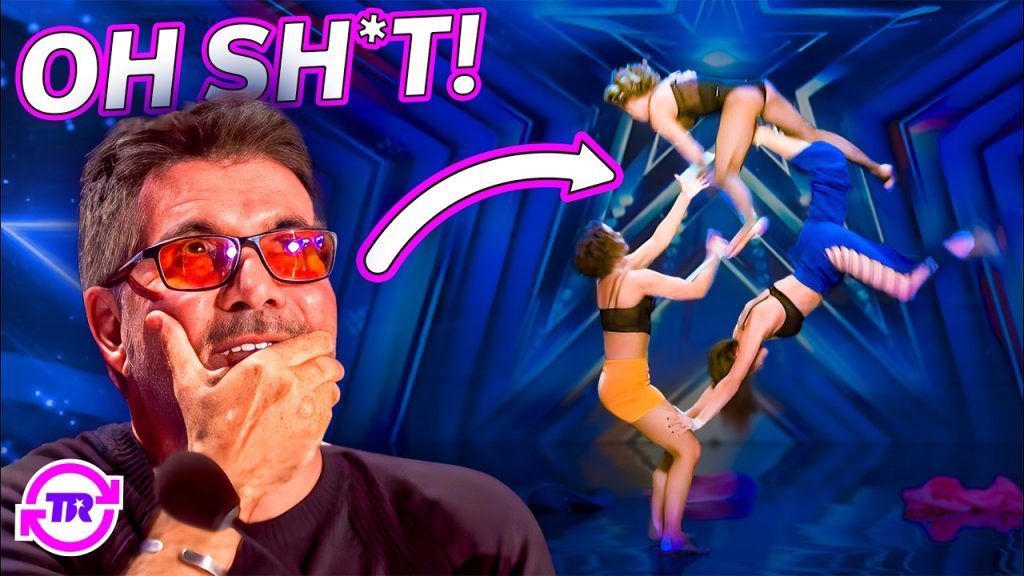
The Fine Line Between Thrill and Tragedy
For centuries, live entertainment has relied on a primal hook: the illusion of mortal peril . From circus high-wires and flaming sword swallowers to modern television talent shows featuring crossbow sharpshooters, audiences flock to witness humans defy death. Yet, the contract between performer and spectator rests on a fragile understanding: the danger must feel absolute, while remaining entirely under control.
When that control slips, the illusion shatters instantly. What was intended as a triumph of human skill transforms into an unscripted nightmare.
Why We Watch: The Psychology of Morbid Curiosity
To understand what happens when a danger act goes wrong, one must first look at the audience. Psychologists refer to the draw of extreme performances as benign masochism —the brain’s ability to enjoy high-arousal negative emotions (like fear or shock) because it knows, at a rational level, that it is safe.
However, live danger acts carry an inherent vulnerability. Unlike cinema, where visual effects guarantee the outcome, live stunts operate in real time under real physical laws. When a stunt misfires:
-
The Social Shield Drops: The audience transitions in a fraction of a second from entertained spectators to involuntary witnesses of real trauma.
-
The Silence: Former stunt coordinators often note that the sudden, heavy silence of an arena when an act fails is far more chilling than any scream.
The Unforgiving Mechanics of Failure
When extreme performances collapse, the root cause usually falls into one of three distinct categories:
| Failure Type | Primary Cause | Classic Example |
| Equipment & Rigging | Mechanical fatigue, frayed cables, snap locks failing | High-wire or aerial silking collapses where safety carabiners unlatch |
| Human Miscalculation | Fatigue, distraction, misjudged timing | Crossbow acts missing the target apple or board by a matter of millimeters |
| Environmental Surprises | Wind gusts, heat expansion, stage lighting glare | Outdoor tightrope walks where unexpected crosswinds shift the center of gravity |
Consider the legendary Wallenda family—famous for their towering seven-person tightrope pyramids performed without safety nets. In 1962, a subtle misstep by a lead walker caused the entire structure to collapse mid-air, resulting in critical injuries and fatalities. The tragedy underscored a harsh truth in high-stakes performing: at extreme heights or speeds, the margin for error isn’t small—it is non-existent.
The Anatomy of the Misstep: Magic & Escapology
Failure in escape artistry or illusion-based danger acts carries unique psychological horror. When Harry Houdini popularized underwater escapes, he established strict safety mechanisms: hidden keys, backstage assistants with axes, and timed signals. Modern performers who push these boundaries—such as buried-alive stunts or underwater chain escapes—often underestimate the physiological pressure.
When oxygen runs low, panic sets in, impairing the exact fine-motor skills required to pick a lock or unravel a knot. On live television broadcasts, producers have had to cut feed mid-performance as safety divers sprinted to shatter glass tanks to rescue unconscious performers.
The Legacy of the Risk
Why do performers continue to raise the stakes even after witnessing catastrophe? The answer lies in the nature of the art. As standard illusions become familiar to modern audiences, artists feel compelled to introduce higher stakes, faster speeds, and genuine hazard to recapture the crowd’s awe.
Yet, every misfire serves as a stark reminder: physics does not care about the audience’s applause . When a danger act goes wrong, it strips away the spectacle to reveal the raw, fragile reality of the human body pushing past its intended limits.